Under contract and on a clock? Call 516-330-3870 Text Email

Inspect This Home Inspections Army Veteran Owned · NY Licensed
Queens · apartment and contemporary

Home inspector in Long Island City, NY

Between 2014 and 2020, Lou Rubino inspected three homes in Long Island City — three jobs, each with a written report, and the photographs below come from them. The reports describe an apartment house, a contemporary and a modern, from 7 to 61 years old.

Rated 4.9 on Google as of November 2026 · U.S. Army veteran owned · NY licence #16000039568 · 516-330-3870

What the Long Island City reports found

Lou’s three summaries flagged 23 items Repair or Replace, most for the roof, chimney and attic (6), kitchen (4) and bathrooms (3). Each report, newest first, as Lou wrote it up.

2020, a modern, about 11 years old, a condominium: 4 items flagged: 4 kitchen. As recorded: flat roof, rubber membrane and pebble, seen from: walked; brick, glass and concrete full brick, metal and structural glass siding, chimney: metal flue pipe; poured concrete foundation, rienforced concrete floor framing, conrete piers; six units and tankless gas (quick recovery) water heater (basement and utility room); 100-amp for apartment circuit breakers (Square D), conduit and BX wiring, copper supply pipes, public water, ptac; sliders, thermal/insulated and fixed windows, hardwood t&g, laminated t&g and tile floors, laminate cabinets, granite counters. Flagged, in Lou’s words: “Refrigerator upper cover frame is loose”; “Does have stainless steel hoses”; “Central laundry room in basement, washer has rubber hoses”; “Electric window shades were removed”. Also noted: “Terrace has hose connection”; “Whole house water filtration system”; “Safety Item: Smoke detectors may be original (2008)”.

2017, a contemporary, about 61 years old, a two-family house: 6 items flagged: 3 roof, chimney and attic; 2 exterior; 1 garage. As recorded: flat roof, slate and rubber membrane, seen from: walked; attic: no storage, passive ventilation; brick full brick siding, chimney: brick; poured concrete foundation, supporting walls; steam boiler heat on oil, hot water off the boiler; 60-amp 1st floor and 70-amp 2nd floor circuit breakers (Square D and Eaton), romex and BX wiring, copper supply pipes, public water, window AC; double-hung, thermal/insulated and sliders windows, hardwood t&g and tile floors, wood cabinets, laminate counters. Flagged, in Lou’s words: “Front right side missing slate from facade”; “Rear section of main roof water accumulating for last three feet”; “Cement chimney cap and ceramic flue are cracked”; “Plastic leader pipe leaking right rear”; “Some lentil irons starting to rust-jack over windows”; “If not repaired rusted lentil irons will crack brick work”; “Front door brick rollock has open joint in rear”; “Rear sliding door metal trim is lifted at platform, and needs to be caulked”; “Rear sliding door screen is torn”; “Front storm door handle is missing”; “Rear metal steps and platform have only the shop coat of paint and is rusting”; “Step support brackets are rusting”; “Rear basement steps side wall is cracked”. Also noted: “Front driveway drain must be kept clear or debris or water will overflow into garage”; “Rear basement entrance drain must be kept clear or debris or water will overflow into basement”; “Brick joint eroding on front wall rollock course”; “Front driveway apron trip hazard”; “Front driveway apron broken up”; “Oil fill right side of front stoop”; “Chimney is not stainless steel lined, required for gas boiler conversions”.

2014, an apartment house, about 7 years old: 13 items flagged: 3 roof, chimney and attic; 3 bathrooms; 3 electrical system. As recorded: flat roof, asphalt/fiberglass, seen from: walked roof; thermostatically controlled fan ventilation; brick full brick siding, chimney: metal flue pipe; poured concrete foundation, rienforced poured concrete floor framing, conrete piers; 200-amp circuit breakers (Siemens), BX wiring, copper supply pipes, public water, heat pump forced air; casement windows, hardwood t&g floors, laminate cabinets, corian counters. Flagged, in Lou’s words: “Trip hazard on roof deck to right of hallway door”; “Leader pipe missing from downspout of elevator shaft roof”; “Ventilation fan cover missing, subject to water intrusion into duct system”; “L/S bedroom window won't close with crank handle”; “L/S living room window safety bar missing”; “Outlet in bedroom r/s open ground”; “Outlet on back of kitchen island open ground”; “Toilet wet at floor joint to tile”; “Tub water faucet handle loose”; “Diverter valve handle missing”; “GFCI outlet not tripping when grounded”; “Utility lights installed in bath”; “Tile joint open behind toilet”. Also noted: “Main water pressure pumps located in water room first floor behind building”; “Ground cable to rod berried in ground”; “Cover loose to junction box on ceiling in compactor room”; “Bathroom electric heater, unable to test, knob missing”.

“Flagged” is HomeGauge’s Repair or Replace mark, not a verdict on the house. See a complete report.

Related: The Queens page · What an inspection costs · Schedule an inspection.
What the inspection can examine here

  • The roof, chimney and attic — how the roof was observed is stated in the report, as New York requires, and the attic is entered wherever a hatch allows.
  • Kitchen plumbing, GFCI protection and the built-in appliances, run through their normal cycles.
  • The heating plant and any central air — operated in normal mode, dated from the data plate, with the flue and clearances looked at where accessible.
  • Radon — a separate, optional test arranged alongside the inspection.

Photographs from Long Island City reports

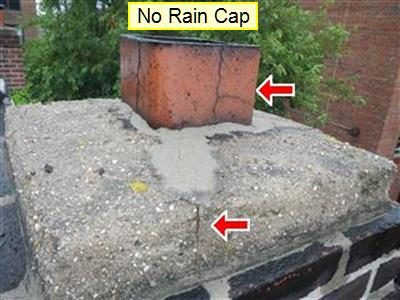
Cement chimney cap with a crack running across it and a cracked ceramic flue tile; report label reads No Rain Cap.
Cement chimney cap and ceramic flue are cracked, and no rain cap is present. Lou recommends evaluation and repair by a licensed brick mason contractor.
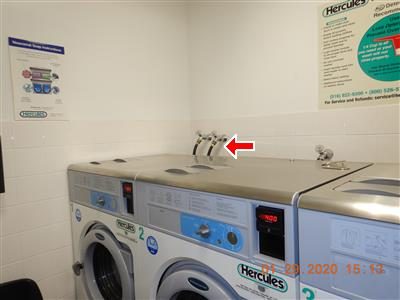
Commercial washing machines in a laundry room with a red arrow pointing to the supply hoses behind them.
Washer has stainless steel hoses, noted under built-in appliances; the report adds that rubber hoses can burst.
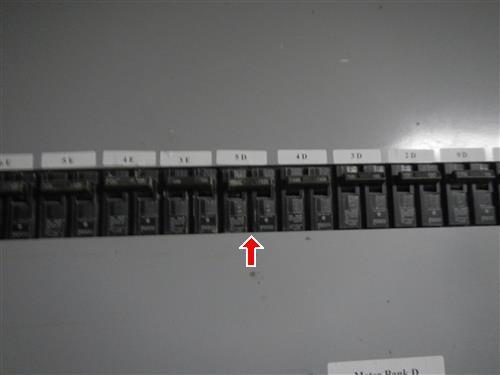
Row of breakers in a building electrical panel with unit labels above, a red arrow pointing to one breaker.
Apartment main disconnect switch (breaker) in the building panel. The report notes the electrical inspection was visual only and outlets were not removed.

All three photographs are from Lou's own Long Island City inspection reports, chosen because they show a building component and nothing that identifies a property or an owner.

Buying in Long Island City: the questions with sourced answers

Each answer is built from Long Island City’s own rows in public data — the Census, NYSDOH, NYSDEC, FEMA, the office that holds the permits — or from Lou’s reports, and cites its source. Data retrieved 1 November 2026.

How old are the houses in Long Island City?

Median year built in zip 11101: 2010 (Queens: 1953). Of 27,093 units, the 2010s built the most, 48%; 59% is from 2000 on. Lou’s reports here: 7 to 61 years old. (ACS)

How are homes in Long Island City heated? Is an oil tank likely?

54% utility gas, 34% electricity; fuel oil 5% against 11% county-wide. NYSDEC logs 101 petroleum spills at private homes in Long Island City since 1992, 9 since 2015. A gas conversion can leave a tank behind. Buried tanks are outside the standards. (ACS, NYSDEC)

Is Long Island City mostly houses or apartments, owned or rented?

59% buildings of 50 or more units, 21% buildings of 20 to 49 units; 16% owner-occupied (Queens: 45%). Lou’s jobs here included a condominium and a two-family house. (ACS)

Is radon a concern in Long Island City?

Queens (reported by borough): 598 basement tests, average 1.26 pCi/L, 22 at 4 or above (4%). Radon testing is optional. (NYSDOH)

Has Long Island City flooded? Is the house in a flood zone?

86 flood-insurance claims from zip 11101 since 1979, most in 2012 (48): 78th of the 189 zips on these pages. Check the address on FEMA’s map. (OpenFEMA)

Who holds the permits and certificate of occupancy in Long Island City?

The NYC Department of Buildings. Look the address up on BIS or DOB NOW. Your attorney usually runs the search.

Which code, water and sewer rules apply in Long Island City?

The New York City Construction Codes, the NYC Department of Buildings records and NYC water and sewer: county-wide, written once.

How much does a home inspection in Long Island City cost, and how fast is the report?

Lou quotes the actual property, not a flat rate — what drives the price is size, age and what is included. The written report arrives the same day as a rule; a large or complex house can run to the next morning. Call or text 516-330-3870.

Queens, town by town

Every Queens place with a page here, each with the real count from Lou's records. The Queens page covers the county as a whole.

Where this sits in Lou's territory

Lou covers Long Island, the five boroughs and Westchester from his base in Wantagh, and the archive behind these pages shows where that work has actually concentrated.

Nearby towns Lou has inspected: Sutton Place · Midtown · Greenpoint · Lenox Hill · Midtown East · Astoria · all 250 towns.

Call Lou Text