Under contract and on a clock? Call 516-330-3870 Text Email

Inspect This Home Inspections Army Veteran Owned · NY Licensed
Queens · the Tudor rows

Home inspector in Cambria Heights, NY

Between 2015 and 2025, Lou Rubino inspected 8 homes in Cambria Heights. The neighbourhood's 1930s brick Tudor rows are good enough that the City landmarked two blocks of them as historic districts in 2022 — and the features that earned that, slate roofs and storybook brickwork, are also the ones an inspection has to treat with respect.

Rated 5.0 on Google as of August 2026 · U.S. Army veteran owned · NY licence #16000039568 · 516-330-3870

Ninety-year-old materials, inspected on their own terms

Slate is the rare roof that can outlive its owners — but it fails piece by piece, and the repair question is always the same: slipped and broken slates, or a system at the end of its fasteners? Lou marks the individual slates so the report supports a repair conversation, not just a replacement quote.

Inside, many of these houses have been renovated top to bottom, which changes the inspection rather than shortening it. New kitchens and finishes sit on 1930s bones; Lou tests what was installed — receptacle by receptacle with a tester where they are accessible, not with a glance — and reads what the renovation chose not to touch.

Related: Queens co-ops and condos · What an inspection costs · Schedule an inspection.
What the inspection can examine here

  • Slate and slate-style roofs, piece by piece — each damaged slate recorded by its location on the roof.
  • Renovated interiors, tested — new finishes over 1930s bones get the tester, not a glance.
  • Wires crossing the yard — traced to what they actually are, because cable lines and the electric service get different repair calls.
  • Rear garages and their wiring — the block-interior driveways put alterations where nobody looks.

Photographs from Cambria Heights reports

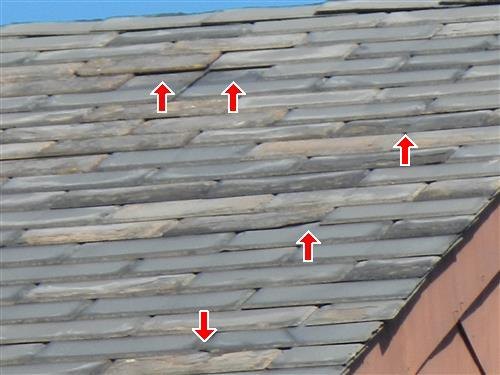
A slate roof with several missing, broken or slipped pieces marked by red arrows.
Red arrows mark slates that are missing, broken or cracked across the middle and lower part of this slope. The report records each damaged area by its location on the roof, so the full extent of the slate damage is documented.
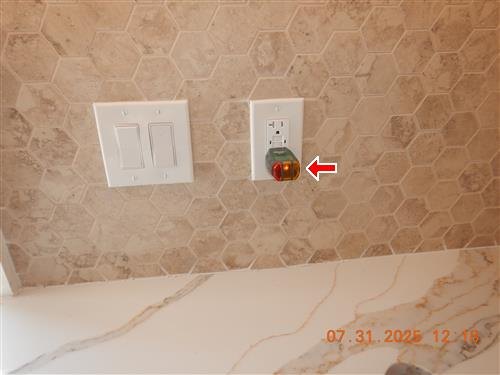
A kitchen backsplash with an outlet tester plugged into a GFCI receptacle, marked by a red arrow.
The tester is plugged into the GFCI receptacle beside the kitchen sink, and this one fails the test - it does not trip. A GFCI that will not trip gives no shock protection, so the report lists it as a safety item for a licensed electrical contractor.
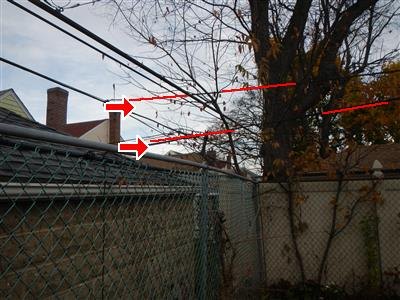
Low overhead cable wires crossing a yard above a chain-link fence, traced with red lines and two arrows.
Red lines trace cable wires running very low across the yard, and the arrows mark where they come down onto the fence. The electric service to this house runs underground, so these are cable lines - the report recommends having the local cable company evaluate and repair them.

All three photographs are from Lou's own Cambria Heights inspection reports, chosen because they show a building component and nothing that identifies a property or an owner.

From the Cambria Heights files

More of what Lou has actually photographed on Cambria Heights inspections. Open any note to learn what the finding means for a buyer — every link stays on this site.

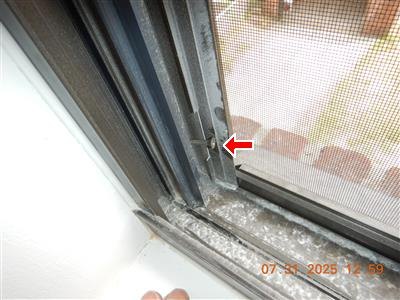
Corner of a metal window frame with insect screen, red arrow at a protruding screw, date stamp.
The arrow marks a sheetrock screw protruding from the side of the frame at the bottom of this bedroom window. The report recommends evaluation and repair by a licensed window contractor.
Why this matters — why findings are photographed

Every photograph in a report exists to make a finding checkable — the point is not the picture, it is that you and your attorney can see exactly what the inspector saw. Read a complete sample report.

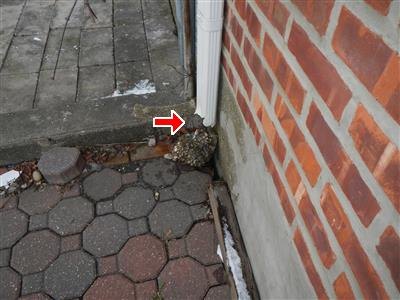
White downspout ending near ground level beside a brick wall, red arrow at the discharge point.
The arrow points to the bottom of this leader pipe, which is missing its elbow and splash block, so roof water drops straight down beside the wall. An elbow and splash block are what carry the discharge away from the foundation.
Why this matters — drainage

Managing roof runoff is often one of the most cost-effective maintenance jobs a house gets — discharge against the foundation raises the risk of moisture problems below. Why drainage decides basements.

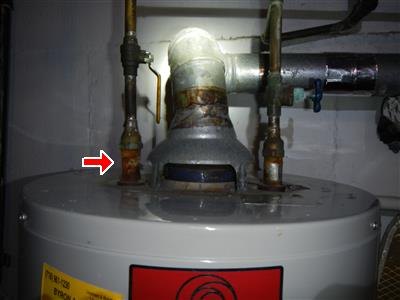
Top of a gas water heater with draft hood and copper piping, red arrow at a corroded fitting.
The arrow marks the pipe nipple on the left side of the water heater, badly rusted by flue gases washing back out of the draft hood. The same report finds the flue pipe pitched wrong and venting carbon monoxide into the basement, so repair by a licensed plumbing contractor is recommended.
Why this matters — the water heater

Water heaters have a known service life, and their installation — clearance, venting, the gas connection, the pan — matters as much as their age. All of it is checked where it sits. What the write-up looks like.

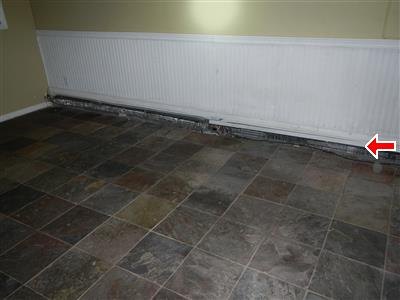
White baseboard heating unit along a wall with its lower front covers missing, red arrow at one end.
The arrow points along this basement heating baseboard, where the sheet-metal front covers are missing and the dark band is the exposed interior of the unit. The report recommends evaluation and repair by a licensed plumbing contractor.
Why this matters — the heating plant

A boiler's data plate gives its real age; the burn chamber and the piping around it give its real condition. Both go in the report so replacement budgeting is arithmetic, not argument. What an inspection costs against what it finds.

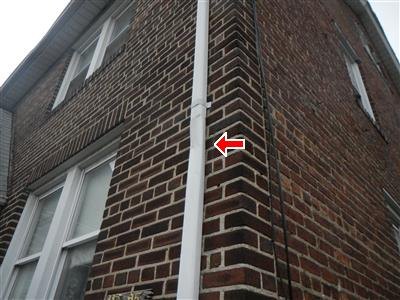
Looking up a brick wall corner at a white downspout, red arrow at a crushed section of the pipe.
The arrow marks the middle of this leader pipe, where it is crushed. A crushed section chokes the flow of roof water, and the report recommends evaluation and repair by a licensed leader and gutter contractor.
Why this matters — drainage

Managing roof runoff is often one of the most cost-effective maintenance jobs a house gets — discharge against the foundation raises the risk of moisture problems below. Why drainage decides basements.

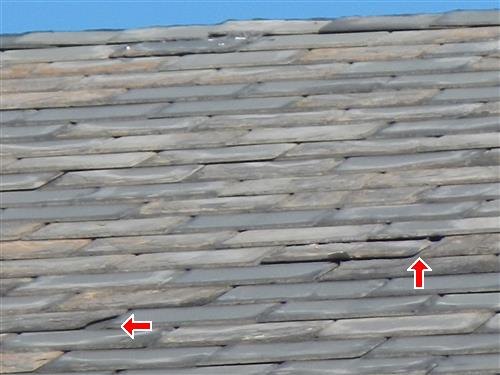
Sloped slate roof with two red arrows at broken and slipped pieces.
Red arrows mark slates that have slipped or broken out of line on this slope. A displaced slate leaves the courses beneath it exposed, so the report records each affected area by its location on the roof.
Why this matters — roof wear

Asphalt and slate-type roofs age in legible stages: curling, cracking, slipped pieces, exposed fasteners. Reading the stage helps establish the visible wear and whether maintenance, repair or further evaluation is the honest next step. The report must say how the roof was examined.

All photographs are from Lou's own inspection reports for jobs in this area, screened so nothing identifies a property or an owner.

Where this sits in Lou's territory

Lou covers Long Island, the five boroughs and Westchester from his base in Wantagh, and the archive behind these pages shows where that work has actually concentrated.

Also nearby: Bellerose · Floral Park · all 26 towns.

Call Lou Text