Under contract and on a clock? Call 516-330-3870 Text Email

Inspect This Home Inspections Army Veteran Owned · NY Licensed
Nassau County · Older villages

Home inspections in Garden City & Rockville Centre: when the house is older than the code

An older house is not a worse house. It is a house whose systems were installed under different rules, replaced piecemeal, and are now of wildly different ages behind the same set of walls.

What an older house makes worth establishing

Electrical

What is actually behind the panel

Knob-and-tube wiring, cloth-sheathed cable, fuse boxes and services too small for how anyone lives now all turn up in houses of this age.

New York requires an inspector to observe the conductors after removing readily accessible panel covers. On an older service that is precisely where the story is.

Plumbing

Three eras in one house

Cast iron waste, galvanized supply and whatever was fitted during the last kitchen job frequently coexist. Each has a different remaining life.

The service line from the street matters too, and its material is worth knowing rather than assuming.

Roof and envelope

Slate outlives the people who fit it

Slate and tile can run a century, but the flashing, the fixings and the deck underneath rarely do — and a repair done in asphalt over slate tells you something.

New York requires the report to describe how the roof was observed, so you will know whether it was walked, laddered or viewed from the ground.

Older houses can also contain asbestos and lead paint. Neither is part of a standard home inspection — both are separate specialist tests, and Lou will tell you plainly when something is worth one.

Photographs from real inspections

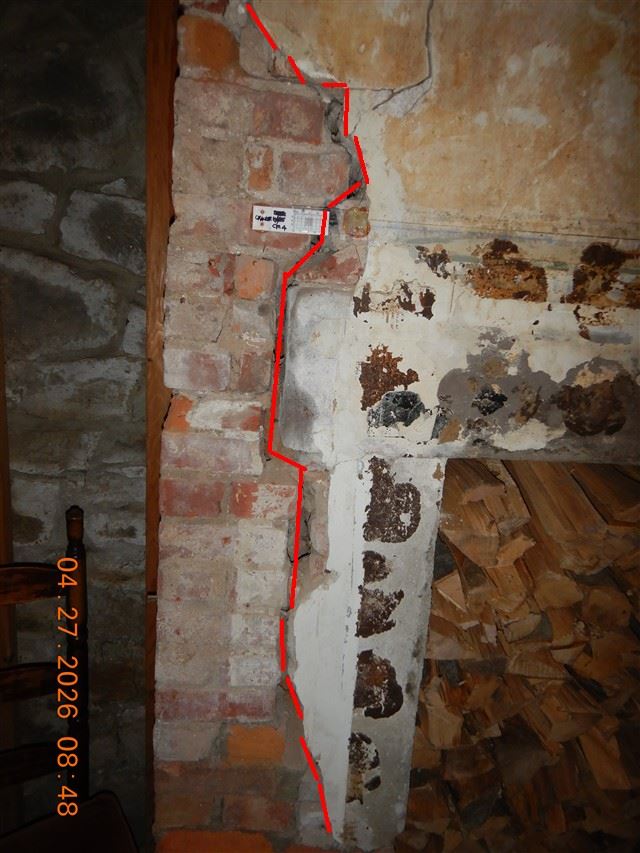
A crack traced through brick and mortar with a numbered gauge fitted across it, so movement can be measured on a return visit
A crack traced through brick and mortar with a numbered gauge fitted across it, so movement can be measured on a return visit.
The service panel with its cover off. On a pre-war house this is where the surprises are.

Real photographs from Lou's own inspections, chosen because they show a building component and nothing that identifies a property or an owner.

Service area

Where Lou works

Long Island, the five boroughs and Westchester. The eight areas below each have their own page, because a house in Levittown and a brownstone in Brooklyn fail in completely different ways.

The real Google map, focused on Garden City & Rockville Centre — the area this page covers. Every area in the list below opens with its own map.

Choosing a home inspector in Rockville Centre & Garden City, NY

Lou's report archive holds seven inspections in Rockville Centre, six in Garden City and seven next door in Lynbrook. Both villages are old by Long Island standards — Rockville Centre incorporated in 1893, and Garden City was laid out as a planned community from 1869 — so a buyer here is more likely than most to be looking at a house that has been rewired, replumbed and re-roofed in stages by different owners.

Two local details are worth knowing before the inspection. Rockville Centre runs its own municipal electric utility, so if the inspection shows an undersized or outdated service, the upgrade is arranged with the village rather than with PSEG Long Island. And in both villages the building permits and certificate of occupancy are kept by the village building department. The inspection does not search those records; Lou points out the work that usually needs a permit — a finished basement, a converted attic, a rear addition, a relocated panel — so your attorney knows exactly what to check against the file.

On the day: call or text 516-330-3870, come along, and Lou walks the house with you. A thermal scan is part of the standard inspection, which on an older house helps find moisture behind plaster and overheating connections in the panel. The report, with photographs and organised by system, arrives the same day as a rule. For the electrical side in depth, see knob-and-tube and old panels; nearby, Floral Park, Valley Stream, Oceanside and the Nassau County overview.

Questions Rockville Centre and Garden City buyers ask

Do you inspect homes in Rockville Centre?

Yes. Rockville Centre, Garden City and the neighbouring villages are a short drive from Lou’s base in Wantagh, and his archive already holds inspections in all three of Rockville Centre, Garden City and Lynbrook.

Is knob-and-tube wiring a reason to walk away?

Not on its own. Old wiring is a question of condition, capacity and what has been added to it since. The report says what era of wiring is present, where it is, and whether a licensed electrician should evaluate it before you close.

Does the inspection test for asbestos or lead paint?

No. Both are separate specialist tests and are not part of a standard home inspection in New York. Lou will tell you plainly when something he sees is worth one.

Will you check the permits and certificate of occupancy?

No. Those records are kept by the village building department and checking them is a records search, usually handled through your attorney. The inspection flags work that typically needs a permit so you know what to ask about.
From the Garden City & Rockville Centre files

More of what Lou has actually photographed on Garden City & Rockville Centre inspections. Open any note to learn what the finding means for a buyer — every link stays on this site.

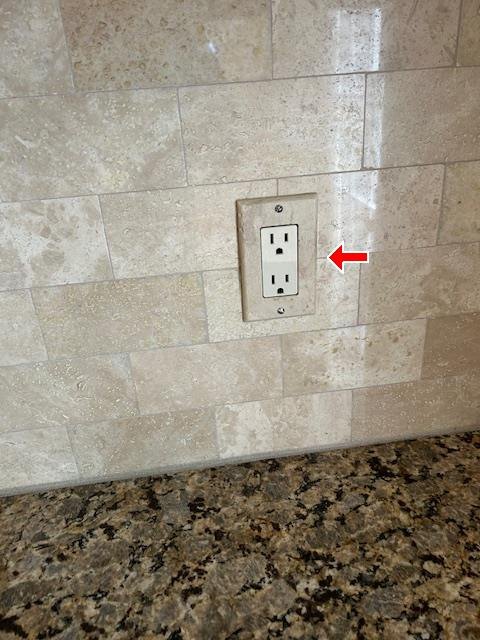
Electrical outlet in a stone tile backsplash above a granite countertop, red arrow pointing at it
The red arrow marks a kitchen backsplash outlet that tested without GFCI shock protection. The report flags this as a safety item and recommends repair by a licensed electrical contractor.
Why this matters — why findings are photographed

Every photograph in a report exists to make a finding checkable — the point is not the picture, it is that you and your attorney can see exactly what the inspector saw. Read a complete sample report.

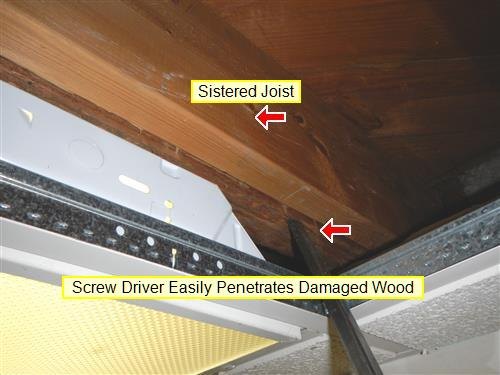
Screwdriver penetrating a damaged wood joist above a ceiling grid, with labels marking a sistered joist
The labels mark a floor joist with extensive termite damage and the sister joist added alongside it, while a screwdriver pressed into the wood shows how easily it penetrates. The report recommends evaluation and repair by carpenter and pest control contractors.
Why this matters — termite evidence

Subterranean termites travel in mud tubes they build themselves — the tubes are the visible evidence, and finding them during an inspection instead of a renovation is worth the entire fee. Termite inspection is part of the conversation when you book.

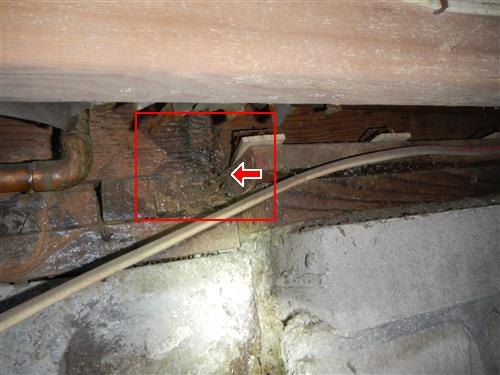
Crawlspace framing over a block foundation with a red box and arrow at a termite-damaged sill plate
The red box and arrow mark termite damage to the sill plate, the wood member that rests on top of the foundation wall in this crawlspace. Termite mud-tube evidence was found on the same wall of the house.
Why this matters — termite evidence

Subterranean termites travel in mud tubes they build themselves — the tubes are the visible evidence, and finding them during an inspection instead of a renovation is worth the entire fee. Termite inspection is part of the conversation when you book.

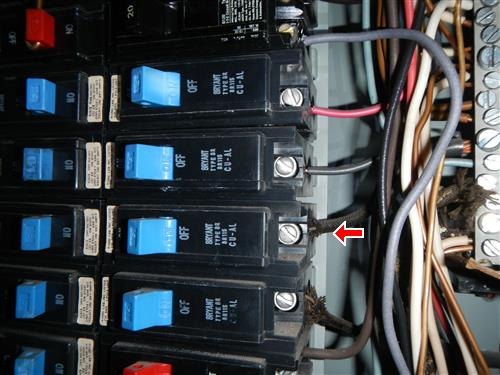
Rows of circuit breakers inside an open electrical panel with a red arrow at a breaker terminal wired with an aluminum conductor
With the panel cover removed, the red arrow marks a breaker terminal wired with an aluminum branch conductor. The report recommends evaluation and repair by a licensed electrical contractor.
Why this matters — the electrical panel

An inspector removes the readily accessible panel covers because New York requires it — most of what matters in a panel is invisible with the cover on. Double-tapped breakers, mixed wire eras and scorched connections are all findings that only appear with the cover off. Why the covers come off.

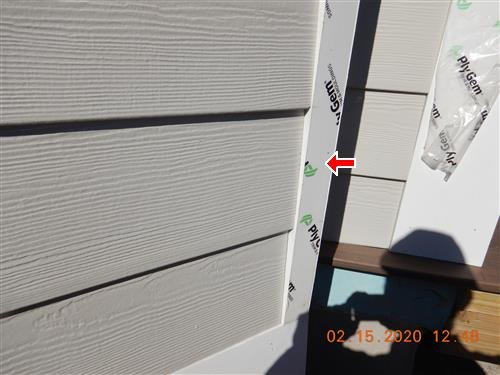
Fiber cement siding at an outside corner with a red arrow at vinyl trim still covered in branded protective film
The red arrow marks an outside corner of newly installed fiber cement siding, where the contractor used 3/4-inch vinyl trim that still carries its protective film. The siding work was still in progress, and the report recommends evaluation by a siding contractor with high-end siding experience.
Why this matters — the exterior envelope

Siding, trim, masonry and parged walls are the building's raincoat, and cracks or failed mortar can give water a way in. The report documents their location and pattern so the right contractor or specialist can evaluate them when warranted. Where water gets in, explained.

All photographs are from Lou's own inspection reports for jobs in this area, screened so nothing identifies a property or an owner.

Call Lou Text