Under contract and on a clock? Call 516-330-3870 Text Email

Inspect This Home Inspections Army Veteran Owned · NY Licensed
Nassau County · Long Island

Home inspection in Nassau County, NY

Between 2013 and 2026, Lou Rubino inspected more than 300 homes in Nassau County — from his own street in Wantagh to Port Washington on the North Shore and Long Beach on the barrier island. Every Nassau town in his archive has a page of its own below — 62 of them, each opening with the real count — and the rest of the county is covered from the same base.

Rated 4.9 on Google as of November 2026 · U.S. Army veteran owned · NY licence #16000039568 · 516-330-3870

Nassau is three counties wearing one name

Most of the South Shore went up in the same post-war years. Levitt & Sons put up 17,447 houses between 1947 and 1951 on concrete slabs with no basement, and Massapequa, Wantagh and Seaford followed in the same years by other builders — so slab, crawlspace and full basement can sit on the same street. Establishing which you are buying is the first question, not an assumption, and on a slab house the attic, the walls and every accessible panel matter more, because there is no below to inspect from.

South of Merrick Road the questions are mostly about water. In 2012 the western bays saw record coastal flooding that went above FEMA's hundred-year base flood elevation, and a great many houses were repaired, raised, or both. If the house was raised: how the structure sits on its new supports and whether the panel and mechanicals went up with it. If it was repaired in place: what the water did behind replaced-looking finishes. Your address decides the flood zone, not your town.

Garden City, Rockville Centre, Port Washington and the older streets of Bellmore and Merrick carry pre-war houses, and an older house is not a worse house — it is one whose systems were installed under different rules and replaced piecemeal. Knob-and-tube, cloth-sheathed cable and fuse boxes turn up behind the panel; cast iron waste, galvanized supply and last year's kitchen plumbing coexist; slate outlives its flashing. New York requires the panel covers off and the report to say how the roof was observed, and on an older house that is precisely where the story is.

Related: What sits under a post-war slab · The flood zone, explained · When the house is older than the code.

What the inspection can examine here

  • Slab, crawlspace or basement — and on a slab, whether the original in-slab heating loop is live or was abandoned for baseboard.
  • Flood zone and elevation south of Merrick Road, and what a post-Sandy repair or lift actually did to the structure and the utilities.
  • The panel, the plumbing eras and the roof on the pre-war villages — covers off, methods stated, as New York requires.
  • Radon — 5.7% of tested Nassau basements were at or above the action level. A separate test, arranged alongside the inspection.

Hiring a home inspector in Nassau County, NY

Nassau is not one building department. The county is split into two cities, three towns and sixty-four incorporated villages, and the permits and certificate of occupancy for a house sit with whichever of those it is in — Garden City, Rockville Centre and Island Park keep their own as villages, Long Beach as a city, and unincorporated places such as Wantagh, Levittown and East Meadow go through the Town of Hempstead, Massapequa through the Town of Oyster Bay. A home inspection is not a permit search. What Lou does is point out the work that usually needs one — a finished basement, a dormer, an enclosed porch, a lifted house, a moved panel — so your attorney knows exactly what to check against the file before closing.

The visit itself works the same in every part of the county. You call or text 516-330-3870, you are encouraged to be there, and Lou walks the house with you and explains what he finds as he goes. A thermal scan is part of the standard inspection, not an add-on. The written report, with photographs and organised by system, arrives the same day as a rule; a large or complex house can run to the next morning. Radon is a separate test arranged alongside it, and on the South Shore a wind mitigation inspection can be done on the same visit.

Questions Nassau County buyers ask

Do you cover all of Nassau County or only the towns listed here?

All of it. Every town where Lou’s archive holds a report has a page of its own here, but the county line is not a boundary and the rest of Nassau is covered from the same base in Wantagh.

Will the home inspection tell me whether the work was permitted?

No. Permits and certificates of occupancy are kept by the village, city or town the house sits in, and checking them is a records search, usually handled through your attorney. The inspection reports the condition of what is there and flags work that typically needs a permit, so you know what to ask about.

How soon do I get the report?

The same day, as a rule. A large or complex property can run to the next morning. It is a full written report with photographs, organised by system.
County-wide facts every Nassau County buyer shares

These are the same for every town in Nassau County, so each town page links here instead of repeating them. Each one cites its source.

The building code in Nassau County

Nassau County homes are built and inspected under the New York State Uniform Fire Prevention and Building Code (19 NYCRR), which applies in every part of the State except New York City and is enforced by each town, village or city building department. Source: dos.ny.gov.

Water and sewer in Nassau County

Nassau County gets all of its drinking water from groundwater beneath Long Island (mainly the Magothy aquifer); it is delivered by 46 public water systems (village, town and special-district suppliers), and there are only about 500 private wells. The Nassau County Department of Health tests public systems alongside the suppliers. Most of the county is sewered: the Nassau County Department of Public Works runs the Bay Park Sewage Treatment Plant, the Cedar Creek Water Pollution Control Plant and 37 pumping stations. Where public sewers exist a property must connect and abandon its cesspool, leaching pool or septic tank under DPW and Health Department guidelines; remaining on-site systems (largely the North Shore) fall under the Health Department's Division of Environmental Health. The inspection reports what the house actually has and its visible condition; a cesspool or septic system needs its own evaluation. Source: www.nassaucountyny.gov.

Flood zones in Nassau County

Flood zones follow the address, not the town. FEMA's OpenFEMA database holds 51,523 NFIP flood-insurance claim records for Nassau County (FIPS 36059), the most of any of the nine downstate counties. Look the address up on FEMA’s Flood Map Service Center before you sign. Source: www.fema.gov.

Radon in Nassau County

Nassau County is in EPA Zone 3 (low potential) — Zone 3 counties have a predicted average indoor radon screening level below 2 pCi/L. EPA still says every home should be tested regardless of zone. NYSDOH's county estimate (Feb 2007, 590 homes measured) is 0.3% of living areas and 4% of basements above 4 pCi/L; Oyster Bay town and Glen Cove city basements were about 8%. Radon is a separate, optional test arranged alongside the inspection. Source: www.epa.gov.

Is there a local rule in Nassau County a buyer should know about?

Under Article XI of the Nassau County Public Health Ordinance the County Health Department regulates oil and chemical storage; it runs a Small Heating Oil Tank Closure program for residential tanks under 1,100 gallons, and removal or abandonment of a home heating-oil tank is scheduled and confirmed through the Health Department's online portal (Office of Toxic & Hazardous Material Regulation, 516-227-9691). Source: www.nassaucountyny.gov.

Anything else specific to Nassau County?

In sewered areas every property must be connected to the public sewer, and old cesspools, leaching pools and septic tanks must be properly abandoned (Health Department Sewer Connections/Closures 516-227-9672). Source: archive.nassaucountyny.gov.

Nassau County, town by town

Every Nassau County town and neighbourhood in Lou's own records, each with the real count and its years — one house or twenty. The photographs on each page come from his reports on homes in that town.

Photographs from Nassau County reports

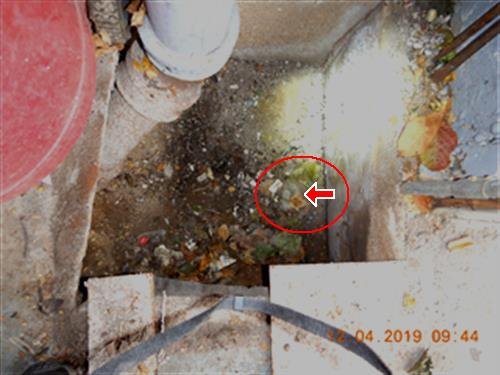
A pit in a concrete floor with piping and debris, one area circled in red.
Circled here is the home's whole-house sewer trap, set in a pit in the floor where debris has collected around it. The trap is the main clean-out point between the house and the sewer line, so the inspector locates and checks it.
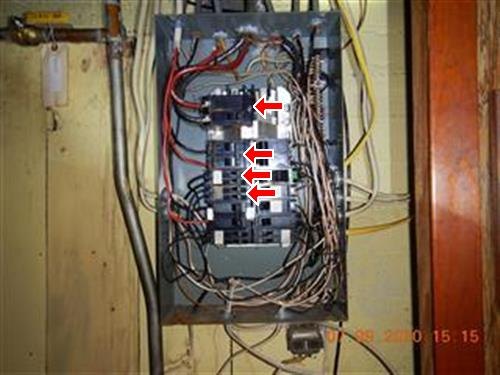
An open electrical panel with red arrows marking the main breaker and water-damaged breakers below it.
Red arrows mark water damage to the main breaker and to several breakers on the left side of this panel, noted as a safety item. The report recommends evaluation and replacement by a licensed electrical contractor.
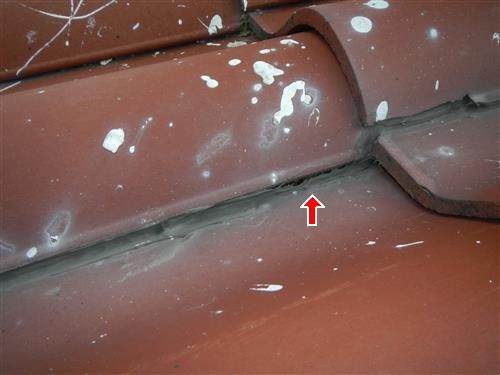
Terracotta clay roof tiles with old silicone sealer along the joints, one joint arrowed
The arrow marks old silicone sealer in the joints of this clay tile roof, where the report found leaking at an overlap. Tile itself lasts a very long time - the aged repairs in its joints are what an inspector checks.

All three photographs are from Lou's own Nassau County inspection reports, chosen because they show a building component and nothing that identifies a property or an owner.

Where this sits in Lou's territory

Lou is based in Wantagh, in the middle of Nassau's South Shore, so most of the county is a short drive rather than a scheduled trip. The archive behind these pages shows where the work has concentrated; the county line is not a boundary.

Also: Suffolk County · Queens · What an inspection costs · all 250 towns.

Call Lou Text