Under contract and on a clock? Call 516-330-3870 Text Email

Inspect This Home Inspections Army Veteran Owned · NY Licensed
Nassau County · South Shore

Home inspector in Bellmore, NY

Between 2014 and 2025, Lou Rubino inspected 19 homes across Bellmore and North Bellmore. Bellmore is older than its post-war neighbours in patches — parts of it were settled well before the subdivisions arrived — so the housing runs from pre-war frame houses to 1950s capes to canal-front rebuilds, and the inspection has to adjust to which one it is.

Rated 5.0 on Google as of August 2026 · U.S. Army veteran owned · NY licence #16000039568 · 516-330-3870

What 19 Bellmore inspections keep turning up

The age spread is the point. A pre-war house carries original plumbing and wiring questions; a post-war cape carries dormer and extension questions; a south-of-Merrick-Road house adds the flood history and the bulkhead. Lou has written reports on all three within a few blocks of each other.

Water is the recurring theme either way — not just the bay. Where the water service enters the house, how old that line is, and what the floor around it looks like tells you more about the next five years of ownership than any listing photo.

Related: Flood-zone blocks, explained · What an inspection costs · Schedule an inspection.
What the inspection can examine here

  • The water service and everything around it — entry point, material, age, and what the floor says about leaks.
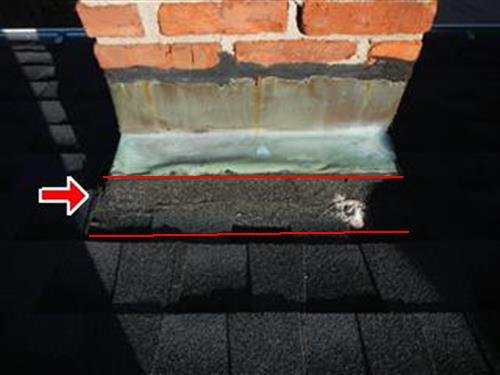
  • Roof-to-chimney junctions — step flashing is where South Shore roofs most often start letting water in.
  • The panel, covers off, as New York requires — pre-war blocks here carry pre-war wiring questions.
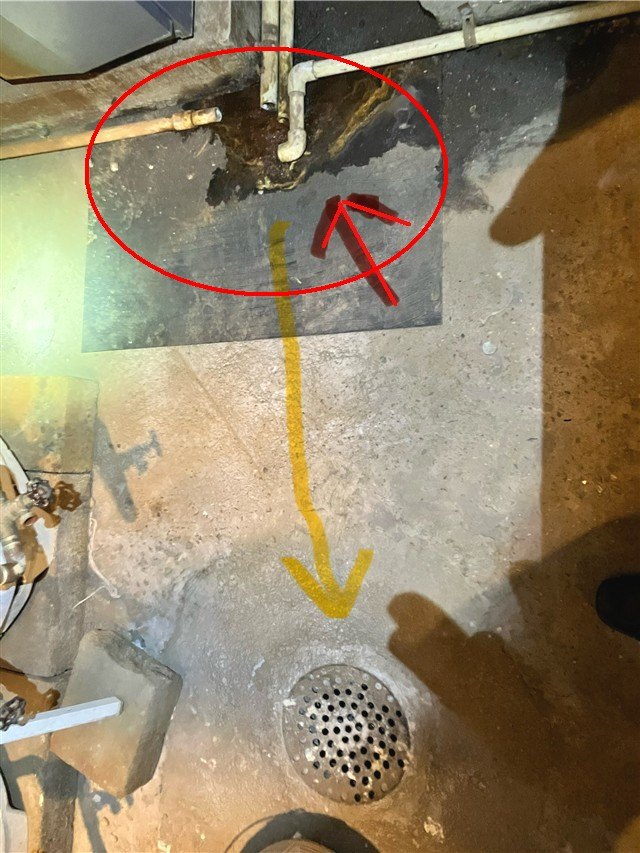
  • Basement floor drains and low points — moisture history leaves evidence even when the day is dry.

Photographs from Bellmore reports

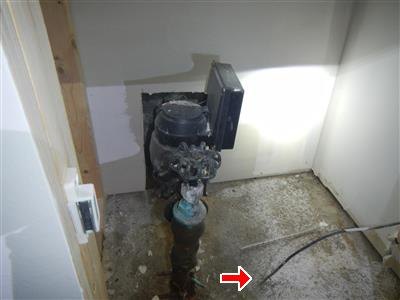
A water meter at the service entry with a red arrow marking a broken ground wire on the floor.
A red arrow marks the broken ground wire at the water main where the service enters the house. This connection is part of the home's electrical grounding, and the report recommends repair by a licensed electrical contractor.
A brick chimney meeting an asphalt roof, the flashing seam marked with red lines.
Red lines and an arrow mark chimney flashing that has opened at the lower left corner where it meets the shingles. The report recommends evaluation and repair by a licensed roofing contractor.
A boiler room floor with a leak area circled in red and an arrow tracing the path to a floor drain.
The red circle marks acidic condensate from the boilers leaking onto the floor, and the arrow traces the short run to the floor drain the condensate pipes should reach. The report flags this as a safety item for a licensed plumbing contractor.

All three photographs are from Lou's own Bellmore inspection reports, chosen because they show a building component and nothing that identifies a property or an owner.

From the Bellmore files

More of what Lou has actually photographed on Bellmore inspections. Open any note to learn what the finding means for a buyer — every link stays on this site.

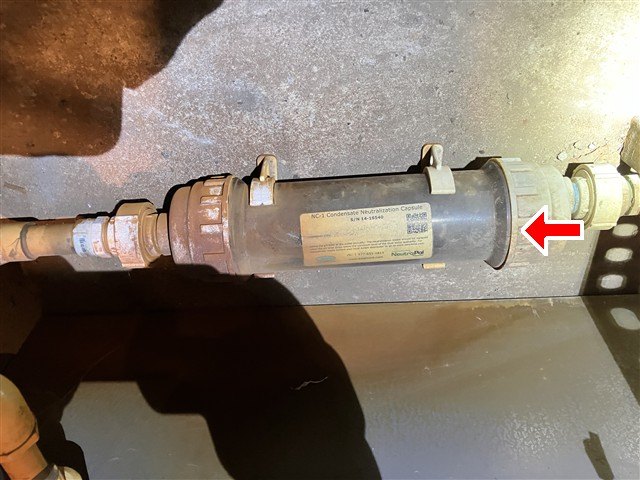
Clear inline condensate neutralizer cartridge installed on piping, red arrow
A red arrow marks the acid-neutralizing filter on a boiler condensate line. The report notes these filters appear to be original and clogged, and says they should be changed annually to maintain the boiler warranty.
Why this matters — the heating plant

A boiler's data plate gives its real age; the burn chamber and the piping around it give its real condition. Both go in the report so replacement budgeting is arithmetic, not argument. What an inspection costs against what it finds.

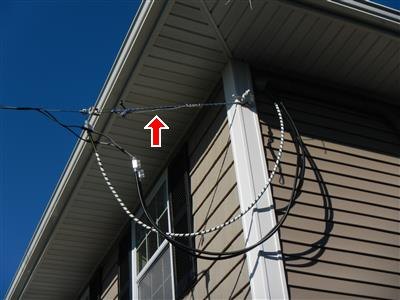
Overhead service wires attached at the corner eave of a house, red arrow pointing up
A red arrow marks the overhead service attachment at the eave, where the support cable is too short and a temporary rope has been installed to hold it. The report recommends evaluation and repair by a licensed electrical contractor and the local utility company.
Why this matters — why findings are photographed

Every photograph in a report exists to make a finding checkable — the point is not the picture, it is that you and your attorney can see exactly what the inspector saw. Read a complete sample report.

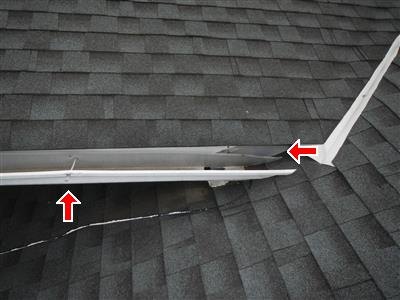
A roof edge with red arrows marking a white metal gutter pulling away from the fascia
Red arrows mark a gutter pulling away from the fascia where its spikes have pulled out. The report recommends replacing the spikes with gutter support brackets and repair by a licensed leader and gutter contractor.
Why this matters — drainage

Managing roof runoff is often one of the most cost-effective maintenance jobs a house gets — discharge against the foundation raises the risk of moisture problems below. Why drainage decides basements.

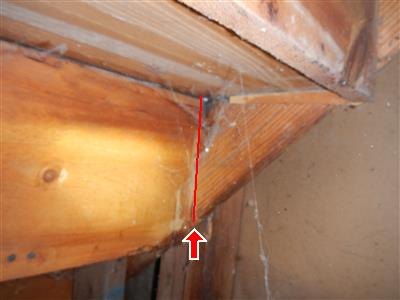
Wood stair framing seen from behind, with a red line and arrow tracing a saw cut in a stringer
A red line and arrow trace a saw cut through a stair stringer, seen from behind the staircase. The report notes the stringers have been cut and the treads and risers are not set into them, and recommends evaluation and repair by a licensed carpenter.
Why this matters — the structure

Cracks and damaged framing are information: their pattern and extent tell the report whether further evaluation by an engineer or the right contractor is the honest next step. The report documents location and extent so change can be seen later. What a condition report does and does not rule on.

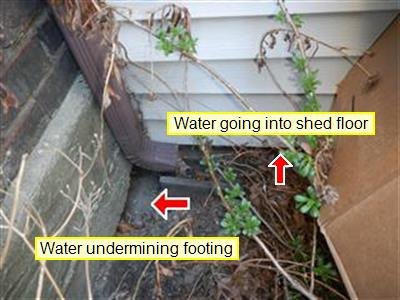
Exterior house corner at ground level with labels about water undermining footing and entering shed floor
The labels mark where water from the leader pipe is undermining the chimney footing and running into the shed floor at this corner. The report calls for a splash block to carry the discharge away from the house.
Why this matters — drainage

Managing roof runoff is often one of the most cost-effective maintenance jobs a house gets — discharge against the foundation raises the risk of moisture problems below. Why drainage decides basements.

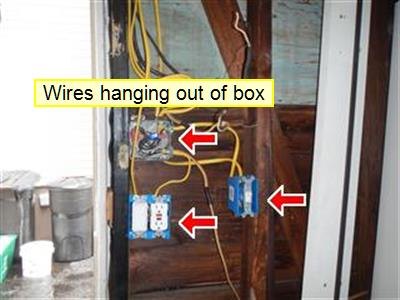
Exposed wall framing with outlets, loose yellow cable, and label reading wires hanging out of box
Arrows and a label mark wires hanging out of a junction box and outlet and switch boxes with their covers missing. The report recommends evaluation and repair by a licensed electrical contractor.
Why this matters — older wiring

Old wiring is not automatically a defect — it is a question of condition, capacity and what was added to it over the decades. The report describes what era of wiring is present and where it needs a closer look. Old wiring and panels, explained.

All photographs are from Lou's own inspection reports for jobs in this area, screened so nothing identifies a property or an owner.

Where this sits in Lou's territory

Lou covers Long Island, the five boroughs and Westchester from his base in Wantagh, and the archive behind these pages shows where that work has actually concentrated.

Also nearby: Merrick · Wantagh · East Meadow · all 26 towns.

Call Lou Text