Under contract and on a clock? Call 516-330-3870 Text Email

Inspect This Home Inspections Army Veteran Owned · NY Licensed
Nassau County · South Shore

Home inspector in Freeport, NY

Between 2015 and 2025, Lou Rubino inspected 11 homes in Freeport. Freeport is one of the South Shore's big, genuinely mixed villages — an older core near the railroad, the canal streets south of Atlantic Avenue where houses come with docks, and everything in between.

Rated 5.0 on Google as of August 2026 · U.S. Army veteran owned · NY licence #16000039568 · 516-330-3870

In Freeport, read the equipment, then the water

On the canal blocks the house extends past the back door: the bulkhead, the dock and the grade toward the water are part of what you are buying, and the flood history is part of the price. Inland, the questions are the ordinary ones of an older village — roofs, chimneys, and heating plants that have been swapped more than once.

Dating the equipment honestly is half the value of the report. A boiler's data plate says what the listing will not: exactly what it is and when it was made — the age nobody has to take on faith. Lou photographs the plates and puts them in the report so the numbers are yours, not anyone's recollection.

Related: Flood zone and elevation, explained · What an inspection costs · Schedule an inspection.
What the inspection can examine here

  • Boiler and water-heater data plates, photographed — equipment gets dated honestly, not by impression.
  • The visible drains and the whole-house trap — older basements keep the main drain trap below floor level, and its condition and the moisture around it go in the report.
  • On canal blocks: the bulkhead, the grade and the flood history — the flood-zone page explains the mechanics.
  • The electrical service, end to end — a village this mixed in age carries every wiring era there is.

Photographs from Freeport reports

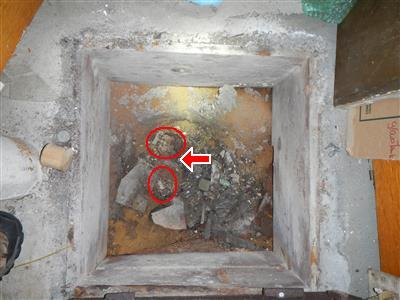
A square pit in a basement floor with the whole-house sewer trap circled in red under debris
Looking down into a pit in the basement floor that houses the home's whole-house sewer trap, circled in red beneath accumulated dust and debris. Older homes often keep the main drain trap below floor level like this.
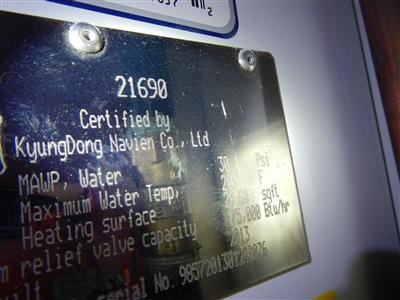
The manufacturer's certification plate on a gas boiler listing ratings, capacity, and year
The manufacturer's certification plate on a gas boiler, recorded for the report. The plate carries the maker, ratings, capacity, and year, which is how a report states the equipment's exact age and size instead of guessing.

Both photographs are from Lou's own Freeport inspection reports, chosen because they show a building component and nothing that identifies a property or an owner.

From the Freeport files

More of what Lou has actually photographed on Freeport inspections. Open any note to learn what the finding means for a buyer — every link stays on this site.

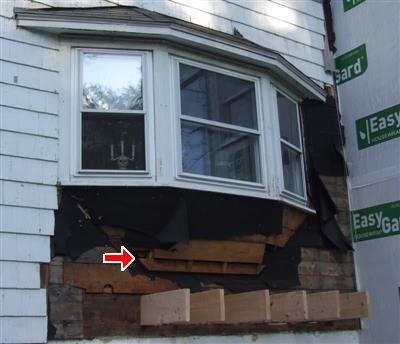
Bay window with siding removed below, exposing black felt, sheathing and new support lumber, with a red arrow at the framing
The siding below this bay window is stripped back and the arrow marks the framing beneath it, where new support lumber is going in. The report documents this bay window, which lacked support, and the new support brackets installed to carry it.
Why this matters — the structure

Cracks and damaged framing are information: their pattern and extent tell the report whether further evaluation by an engineer or the right contractor is the honest next step. The report documents location and extent so change can be seen later. What a condition report does and does not rule on.

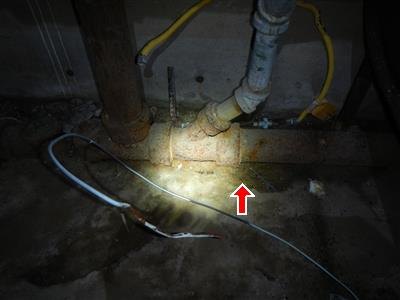
Corroded cast iron drain pipe near a basement floor with red arrow at a pipe joint
This rusted cast iron piping at the basement floor is in the area of the home's whole-house trap, where the report notes the walls were very damp. Moisture concentrated around old drain piping is documented so the source can be traced and repaired.
Why this matters — the drains

Drains are judged where they are visible — traps, materials, slopes and improvised repairs. An improper fitting works right up until it does not, which is why it belongs in the report while it is still cheap. See how findings are written up in a real report.

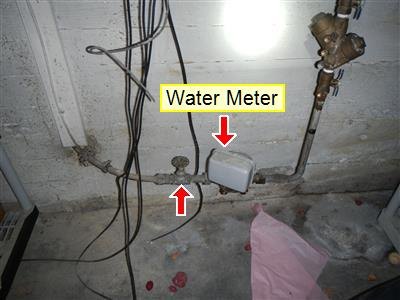
Water meter and shut-off valve on a basement supply pipe, marked with a yellow label and arrows
The label and arrows identify the water meter and the shut-off valve beside it. Knowing where the main shut-off is lets you stop the water quickly in a plumbing emergency.
Why this matters — supply plumbing

Supply plumbing is judged by material and era — and by the small evidence at the joints. Corrosion and mineral tracks at connections show slow weeping long before a failure. Moisture evidence, explained.

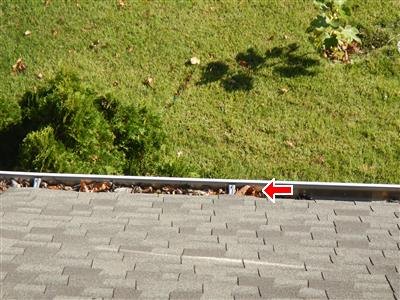
Asphalt shingle roof edge with a gutter holding leaves and debris, red arrow pointing into the gutter
The red arrow points to leaves and debris collecting in the gutter at the roof edge. Blocked gutters overflow and can send water toward the house instead of away from it.
Why this matters — drainage

Managing roof runoff is often one of the most cost-effective maintenance jobs a house gets — discharge against the foundation raises the risk of moisture problems below. Why drainage decides basements.

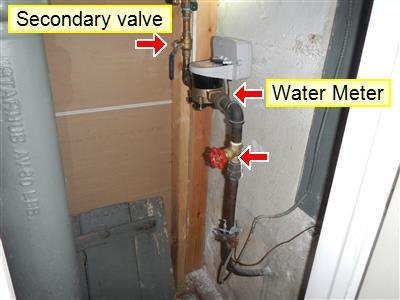
Water meter and two valves on a vertical pipe in a narrow closet, marked with labels and arrows
Labels mark the water meter and a secondary valve, and the lower arrow points to the red-handled primary shut-off valve, whose handle the report found stripped. A main valve that cannot close properly is flagged for repair, because it is how you stop the water in an emergency.
Why this matters — supply plumbing

Supply plumbing is judged by material and era — and by the small evidence at the joints. Corrosion and mineral tracks at connections show slow weeping long before a failure. Moisture evidence, explained.

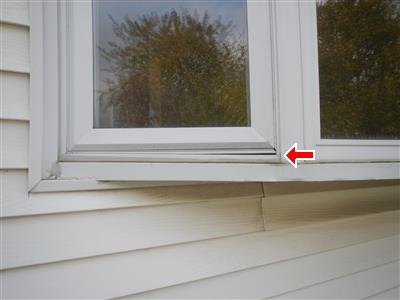
Vinyl window sill edge over horizontal siding with a red arrow at a gap in the trim
The red arrow marks a gap at the sill of this bay window, which the report found has sagged out of square and needs support brackets. The sag makes the window difficult to open and close.
Why this matters — the structure

Cracks and damaged framing are information: their pattern and extent tell the report whether further evaluation by an engineer or the right contractor is the honest next step. The report documents location and extent so change can be seen later. What a condition report does and does not rule on.

All photographs are from Lou's own inspection reports for jobs in this area, screened so nothing identifies a property or an owner.

Where this sits in Lou's territory

Lou covers Long Island, the five boroughs and Westchester from his base in Wantagh, and the archive behind these pages shows where that work has actually concentrated.

Also nearby: Merrick · Oceanside · Long Beach · all 26 towns.

Call Lou Text