Under contract and on a clock? Call 516-330-3870 Text Email

Inspect This Home Inspections Army Veteran Owned · NY Licensed
Nassau County · North Shore

Home inspector in Port Washington, NY

Between 2015 and 2023, Lou Rubino inspected 12 homes in Port Washington. This is one of Nassau's genuinely old places — settled in the 1600s, a working sand-mining port into the twentieth century — and its housing runs decades older than the post-war South Shore, on hillier ground, closer to the water table in the low spots.

Rated 5.0 on Google as of August 2026 · U.S. Army veteran owned · NY licence #16000039568 · 516-330-3870

Old houses keep old company

Age brings a different pest and moisture profile. Termite evidence — the mud tubes they build to travel — turns up in old sills and framing here, and finding it during the inspection rather than during a renovation is worth the whole fee. New York's standard has Lou reporting what he observes; a wood-destroying-insect finding is one observation you want early.

The cellars tell the rest of the story. Stone and early-concrete foundations, water services and meters that have been in place for generations, additions stitched onto houses that were already old when the additions went on. None of it is unusual for Port Washington — which is exactly why the person inspecting it should have seen a dozen of these before yours.

Related: North Shore grades and systems · What an inspection costs · Schedule an inspection.
What the inspection can examine here

  • Wood-destroying insect evidence — mud tubes on old sills, found before a renovation finds them.
  • Stone and early-concrete foundations — movement, moisture and repairs are read in the cellar.
  • The services — water and electrical entries that predate every owner you can name.
  • Hillside drainage — on sloped lots, where the water goes decides what the cellar looks like. North Shore grades are their own subject.

Photographs from Port Washington reports

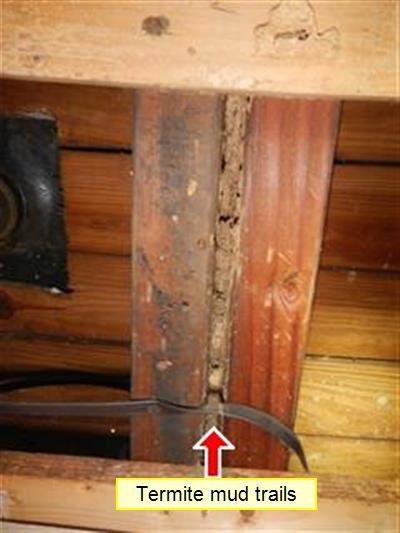
Termite mud tubes running along wood framing, labelled in the inspection photograph.
The label marks termite mud trails on basement framing. The report notes termite damage to two sistered 2x8 floor joists in the basement ceiling and recommends evaluation and repair by licensed pest control and carpenter contractors.
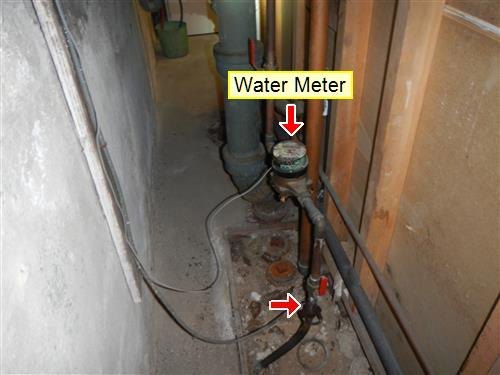
Cellar passage with a labelled water meter and a red arrow at the whole-house water shut-off valve below
The label marks the water meter, and the lower arrow points to the whole-house water shut-off valve on the piping below it. The report records where this valve is so an owner can stop the water quickly if a pipe fails.
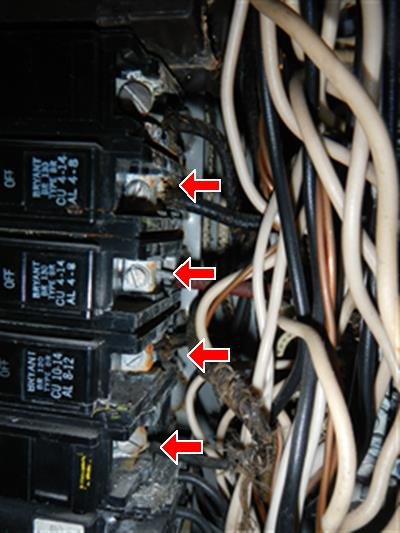
A close view of circuit breakers in an electrical panel with four connection points arrowed.
The arrows mark breaker connections in the main electrical panel that show water damage. The report notes the breakers in the main panel have water damage on the right side and recommends evaluation and repair by a licensed electrical contractor.

All three photographs are from Lou's own Port Washington inspection reports, chosen because they show a building component and nothing that identifies a property or an owner.

From the Port Washington files

More of what Lou has actually photographed on Port Washington inspections. Open any note to learn what the finding means for a buyer — every link stays on this site.

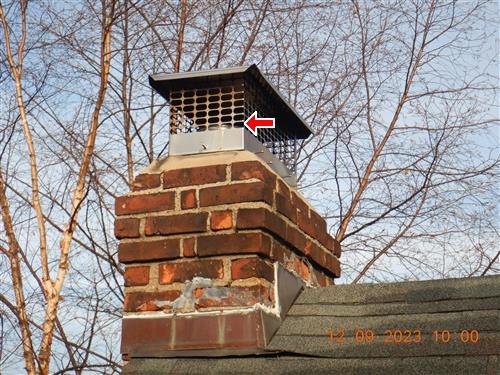
Brick chimney with a metal mesh cap, red arrow on the screen, broken brick at the roofline
The red arrow marks the screened metal cap on this brick chimney, the top of a stainless steel flue liner. The report notes the boiler flue of the chimney is stainless steel lined.
Why this matters — the chimney

Chimney crowns, caps and screens are the cheap parts that protect the expensive parts. Cracked crowns and missing screens let water and animals into a flue, and the damage below can run for years unseen. What happens when part of a system cannot be seen.

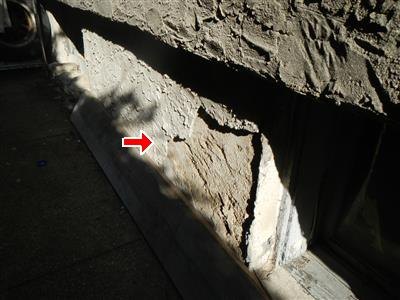
Stucco broken loose at the base of a wall where it meets the foundation, red arrow at the damage
The red arrow marks stucco that is pulling away from the foundation at the base of this wall. Loose sections like this let water get behind the finish and break away more material.
Why this matters — the exterior envelope

Siding, trim, masonry and parged walls are the building's raincoat, and cracks or failed mortar can give water a way in. The report documents their location and pattern so the right contractor or specialist can evaluate them when warranted. Where water gets in, explained.

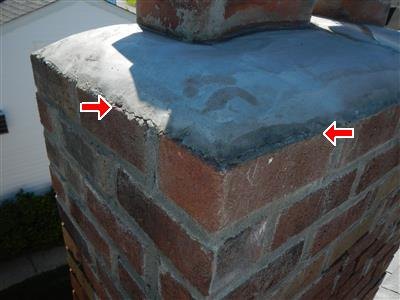
Brick chimney corner with a cement-washed top, two red arrows at chipped edges
The red arrows mark chipped, deteriorating edges of the cement wash on top of this brick chimney. This sloped top layer is what sheds water, so broken edges let moisture into the brickwork below.
Why this matters — the chimney

Chimney crowns, caps and screens are the cheap parts that protect the expensive parts. Cracked crowns and missing screens let water and animals into a flue, and the damage below can run for years unseen. What happens when part of a system cannot be seen.

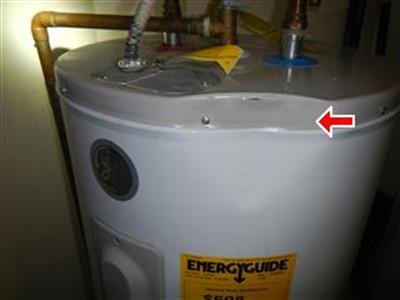
Top of an electric water heater with copper piping, red arrow at a dented case rim
The red arrow marks a dent in the outer case at the top of this electric water heater. The report notes the water heater case is damaged and that the damage is cosmetic only.
Why this matters — the water heater

Water heaters have a known service life, and their installation — clearance, venting, the gas connection, the pan — matters as much as their age. All of it is checked where it sits. What the write-up looks like.

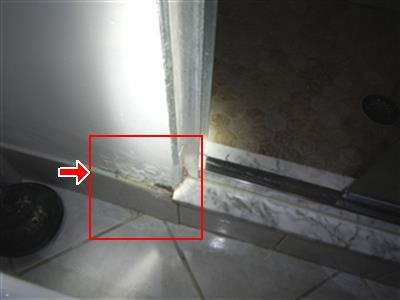
Corner of a shower door frame at a marble curb, red box and arrow at a stained joint
The red box marks staining at the corner where the shower meets the wall and curb. The report notes water damage to the wall and loose tile between the toilet and shower, and recommends evaluation and repair by a licensed ceramic tile contractor.
Why this matters — interior moisture

Interior staining, failed tile and soft surfaces are the end of a story that started somewhere else. The inspection's job is to find the start — and to say whether the evidence looks active or historical. Water damage and moisture, explained.

All photographs are from Lou's own inspection reports for jobs in this area, screened so nothing identifies a property or an owner.

Where this sits in Lou's territory

Lou covers Long Island, the five boroughs and Westchester from his base in Wantagh, and the archive behind these pages shows where that work has actually concentrated.

Also nearby: Huntington & Northport · all 26 towns.

Call Lou Text