Under contract and on a clock? Call 516-330-3870 Text Email

Inspect This Home Inspections Army Veteran Owned · NY Licensed
Nassau County · South Shore

Home inspector in Merrick, NY

Between 2014 and 2020, Lou Rubino inspected 11 homes in Merrick. Like its neighbours, Merrick splits in two: older streets near the railroad with houses that pre-date the war, and the post-war spread of capes and splits filling in around them, running south to the canals.

Rated 5.0 on Google as of August 2026 · U.S. Army veteran owned · NY licence #16000039568 · 516-330-3870

In Merrick, the panel tells you the decade

On older Merrick blocks the electrical system is often the honest historian of the house. Lou opens the readily accessible panel covers on every inspection — New York requires it (19 NYCRR 197-5.9) — and what is behind the door is where Merrick findings have concentrated — water damage reaching a main breaker, a breaker carrying two circuits under one lug — the kind of thing only visible with the cover off.

Heating runs a close second. Chimneys and flues that served an oil boiler for fifty years have usually been converted, re-lined or abandoned somewhere along the way, and which one happened is worth knowing before closing rather than after.

Related: Old wiring and panels, explained · What an inspection costs · Schedule an inspection.
What the inspection can examine here

  • Every readily accessible panel cover comes off — older wiring and panels are the recurring Merrick finding.
  • Flues and chimneys — what the visible evidence says about conversions, liners and abandonment goes in the report, with photographs.
  • The heating plant and its age, read off the data plate, not guessed.
  • Gas metering and service equipment — how a house is metered is part of what you are buying.

Photographs from Merrick reports

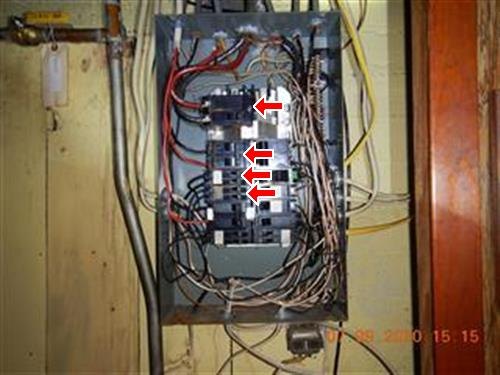
An open electrical panel with red arrows marking the main breaker and water-damaged breakers below it.
Red arrows mark water damage to the main breaker and to several breakers on the left side of this panel, noted as a safety item. The report recommends evaluation and replacement by a licensed electrical contractor.
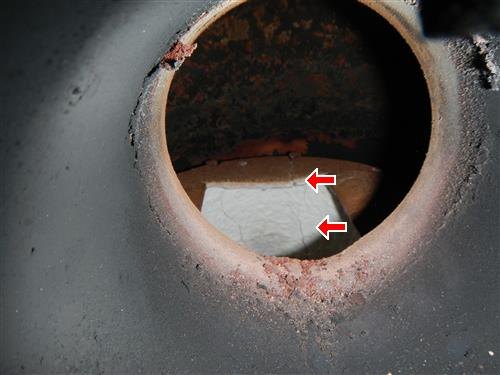
View through a round furnace inspection port at the firebox inside, with red arrows marking a crack.
Looking through the furnace's round inspection port, arrows mark cracking in the firebox. The report notes the cracked firebox and scale inside this 34-year-old furnace and recommends service and repair by a licensed HVAC contractor.
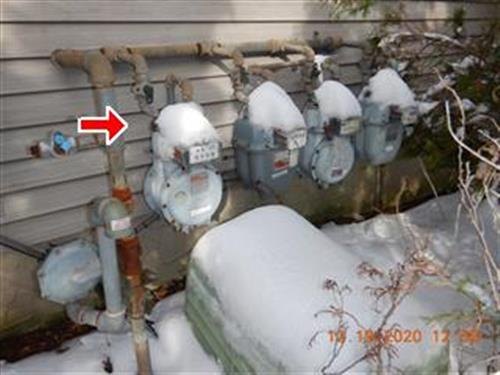
A bank of four gas meters mounted on house siding under snow, one arrowed.
A bank of four gas meters on the exterior side wall, with the arrow marking one of them. The report photographs the meters and records the gas service as inspected.

All three photographs are from Lou's own Merrick inspection reports, chosen because they show a building component and nothing that identifies a property or an owner.

From the Merrick files

More of what Lou has actually photographed on Merrick inspections. Open any note to learn what the finding means for a buyer — every link stays on this site.

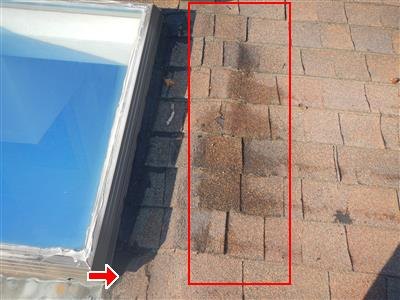
Asphalt shingle roof beside a skylight with a red box marking buckling shingles and an arrow at a metal deflector piece
The red box marks shingles buckling along the side of a skylight, and the arrow points to a piece of metal flashing being used as a water deflector. The report recommends evaluation and repair by a licensed roofing contractor.
Why this matters — roof wear

Asphalt and slate-type roofs age in legible stages: curling, cracking, slipped pieces, exposed fasteners. Reading the stage helps establish the visible wear and whether maintenance, repair or further evaluation is the honest next step. The report must say how the roof was examined.

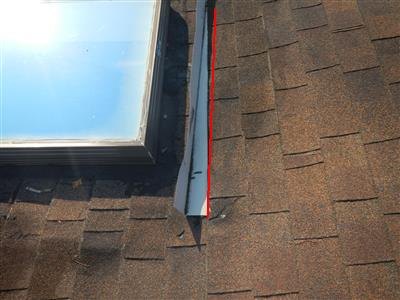
A loose piece of metal flashing beside a skylight on an asphalt shingle roof, with a red line along its raised edge
The red line follows a piece of metal flashing being used as a makeshift water deflector along the side of this skylight. The report also notes shingles buckling on both sides of the skylight and recommends evaluation and repair by a licensed roofing contractor.
Why this matters — flashing

Flashing — the metal where a roof meets a wall, a chimney or another roof — is where most leaks actually start. A leak here typically shows up rooms away from its source, which is why the report photographs the source. How moisture problems are traced.

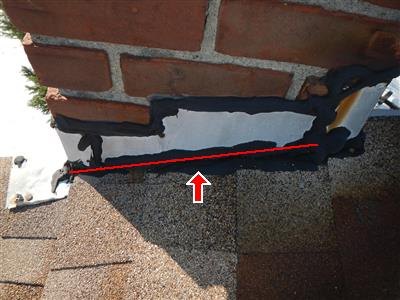
Brick chimney base with black roof cement smeared over flashing, red line and arrow
The red line and arrow follow the flashing at the base of this brick chimney, which is cracked at the roof line where roofing cement has been smeared over it. The report recommends evaluation and repair by a licensed roofing contractor.
Why this matters — flashing

Flashing — the metal where a roof meets a wall, a chimney or another roof — is where most leaks actually start. A leak here typically shows up rooms away from its source, which is why the report photographs the source. How moisture problems are traced.

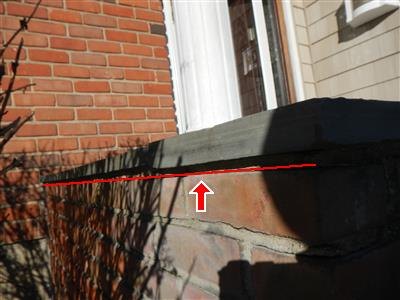
Dark stone cap on an exterior brick wall below a window, red line and arrow at the joint
The red line and arrow mark the joint under a loose edge stone capping the brick side wall of a front stoop. The report flags the stoop's stones as loose with eroded joints, work for a masonry contractor.
Why this matters — the exterior envelope

Siding, trim, masonry and parged walls are the building's raincoat, and cracks or failed mortar can give water a way in. The report documents their location and pattern so the right contractor or specialist can evaluate them when warranted. Where water gets in, explained.

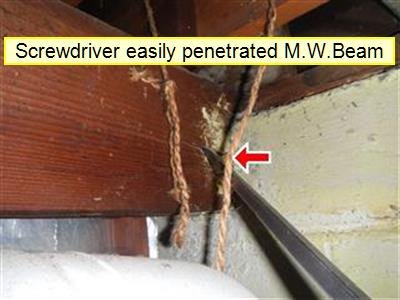
Wood beam in an unfinished space, label reading screwdriver easily penetrated main wood beam
The label records that a screwdriver easily penetrated this main wood beam — the report identifies termite damage to the beam over a 36-inch span at the rear wall. It calls for the damaged section to be replaced and for evaluation by licensed pest control and carpentry contractors.
Why this matters — the structure

Cracks and damaged framing are information: their pattern and extent tell the report whether further evaluation by an engineer or the right contractor is the honest next step. The report documents location and extent so change can be seen later. What a condition report does and does not rule on.

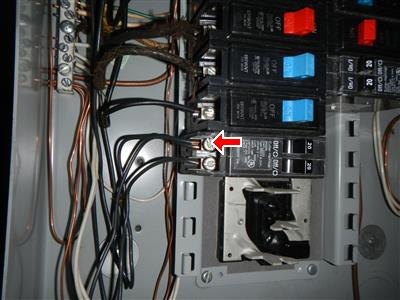
Inside of an electrical panel, red arrow at a breaker terminal with two wires under one lug
The red arrow marks a breaker in the main panel that is double lugged — two circuit wires landed under one terminal. The report flags this connection for evaluation and repair by a licensed electrical contractor.
Why this matters — the electrical panel

An inspector removes the readily accessible panel covers because New York requires it — most of what matters in a panel is invisible with the cover on. Double-tapped breakers, mixed wire eras and scorched connections are all findings that only appear with the cover off. Why the covers come off.

All photographs are from Lou's own inspection reports for jobs in this area, screened so nothing identifies a property or an owner.

Where this sits in Lou's territory

Lou covers Long Island, the five boroughs and Westchester from his base in Wantagh, and the archive behind these pages shows where that work has actually concentrated.

Also nearby: Bellmore · Freeport · East Meadow · all 26 towns.

Call Lou Text