Under contract and on a clock? Call 516-330-3870 Text Email

Inspect This Home Inspections Army Veteran Owned · NY Licensed
Queens · frame houses and co-ops

Home inspector in Flushing, NY

Between 2015 and 2021, Lou Rubino inspected 11 homes in Flushing. Flushing is one of the oldest settled parts of Queens, and its side streets still carry the frame houses to prove it — often wearing newer siding, newer windows and two or three newer roofs over the original one.

Rated 5.0 on Google as of August 2026 · U.S. Army veteran owned · NY licence #16000039568 · 516-330-3870

In Flushing, the layers are the finding

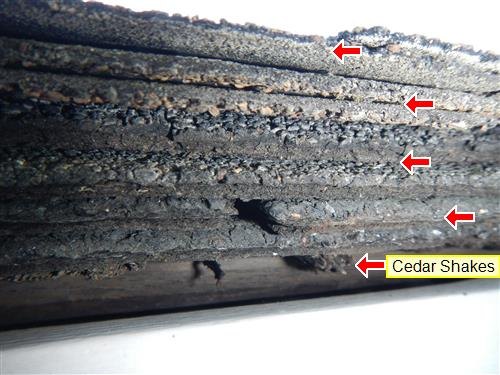
Lou has photographed Flushing roof edges where you can count the history like tree rings: layer over layer of asphalt shingles, all of it riding on the original cedar shakes. Every added layer is weight the framing was never asked to carry and a re-roofing bill that doubles because it now includes a tear-off. You cannot see it from the curb; you can see it at the edge, if you know to look.

The same archaeology applies inside. Panels, wiring and heating in these houses span a century of standards, and the question is never whether the house is old — it is which parts were brought along and which were left behind.

Related: Buying a Flushing co-op instead? · Old wiring, explained · Schedule an inspection.
What the inspection can examine here

  • Roof edges, in section — layer counts change the next re-roofing bill by thousands.
  • The panel and service — older systems carry specific, checkable risks.
  • The frame under the skins — siding generations hide sill and framing questions.
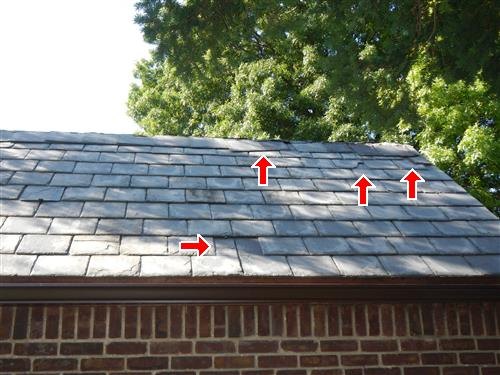
  • Older roofing materials — slate outlasts everything else, but individual pieces slip and break, as the photograph below shows.

Photographs from Flushing reports

A roof edge showing multiple layers of asphalt shingles stacked over cedar shakes, labelled and arrowed.
A Flushing roof edge in cross-section: layers of asphalt shingle over the original cedar shakes, each one arrowed. The next roof here starts with a tear-off.
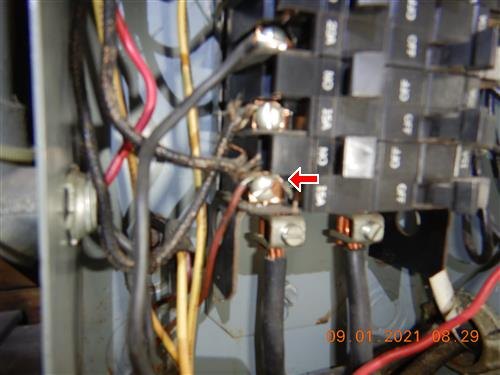
A close view inside an electrical panel showing older conductors and lugs, one connection arrowed.
Inside the main electrical panel, the red arrow marks a breaker with two wires landed under one lug, a condition called double lugging. The report flags it for evaluation and repair by a licensed electrician.
An older grey slate roof with red arrows marking missing and loose slates and a darker repaired area
Red arrows mark missing and loose slates on an older slate roof. Slate lasts a long time, but individual pieces slip and break, leaving gaps where water can reach the layers beneath.

All three photographs are from Lou's own Flushing inspection reports, chosen because they show a building component and nothing that identifies a property or an owner.

From the Flushing files

More of what Lou has actually photographed on Flushing inspections. Open any note to learn what the finding means for a buyer — every link stays on this site.

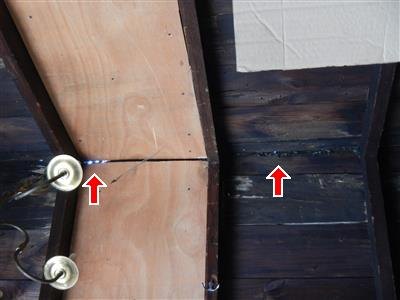
Underside of a garage roof at the peak, plywood panel beside dark wood boards, two red arrows pointing at daylight through an opening at the ridge
Looking up at the roof peak from inside the garage, the arrows mark daylight showing through an opening at the ridge. Anywhere light can enter, water can too.
Why this matters — the attic

Attics record a house's history: leaks the ceilings were painted over, ventilation that was never right, alterations that ended up there. It is usually the highest-value twenty minutes of the inspection. Why being there while Lou works is worth it.

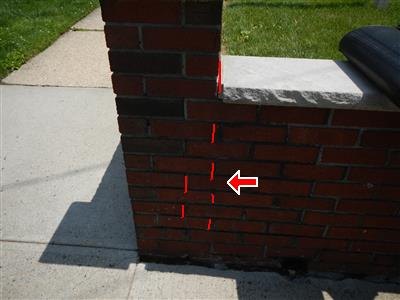
A low brick wall with a stone cap beside a sidewalk, a crack traced in red down the mortar joints, red arrow
A crack traced in red running down the mortar joints at the corner of a low brick wall beside the sidewalk. The report records this crack at the wall's corner.
Why this matters — why findings are photographed

Every photograph in a report exists to make a finding checkable — the point is not the picture, it is that you and your attorney can see exactly what the inspector saw. Read a complete sample report.

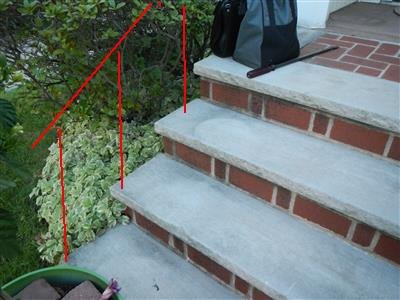
Brick and stone exterior steps with vertical red lines drawn along the open side
Exterior masonry steps with red lines drawn where a handrail should be. Steps with several risers and no railing are a common safety finding, and the markup shows exactly where the rail belongs.
Why this matters — why findings are photographed

Every photograph in a report exists to make a finding checkable — the point is not the picture, it is that you and your attorney can see exactly what the inspector saw. Read a complete sample report.

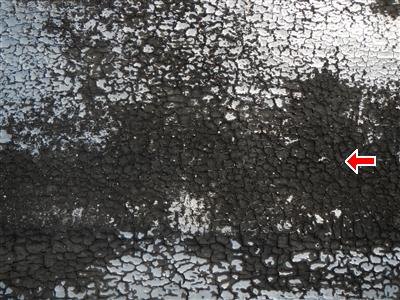
Flat roof surface with cracked, alligatored black coating over silver paint, red arrow
Alligator-pattern cracking in the dark areas of a flat roof's coating, marked by the arrow. The report puts this roof at about 18 to 20 years old, near the end of a flat roof's typical 20-year life, and refers it to a flat-roof contractor for evaluation and repair.
Why this matters — the flat roof

A flat roof hides everything from the street: membrane seams, patches, drainage and parapet condition. Patching is normal maintenance — the report records what condition the membrane shows today and whether repair or further evaluation is the honest next step. How roofs are examined and reported.

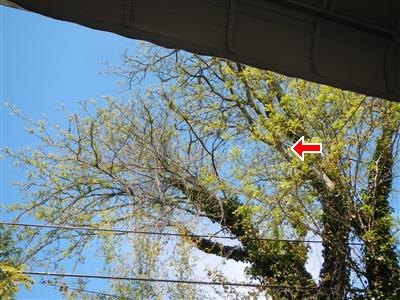
Large tree with branches overhanging the yard, seen from below an eave, utility wires crossing, red arrow at an ivy-covered limb
A large tree seen from under the eave, with branches hanging over the yard. The arrow marks a heavy, ivy-covered limb near the overhead service wires.
Why this matters — why findings are photographed

Every photograph in a report exists to make a finding checkable — the point is not the picture, it is that you and your attorney can see exactly what the inspector saw. Read a complete sample report.

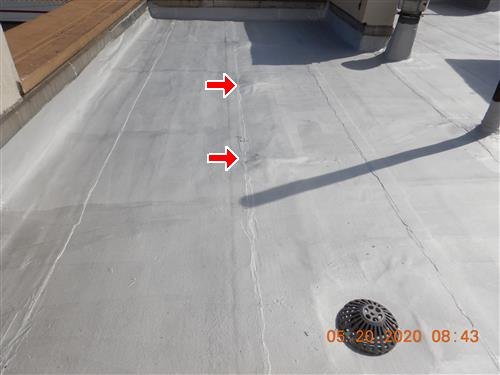
Silver-coated flat roof with a domed drain strainer, two red arrows at raised spots along a seam, orange date stamp
A silver-coated flat roof with a domed strainer over its drain. The two arrows mark raised areas in the roofing near the roof door, noted in the report as a trip hazard on a roof people walk on.
Why this matters — the flat roof

A flat roof hides everything from the street: membrane seams, patches, drainage and parapet condition. Patching is normal maintenance — the report records what condition the membrane shows today and whether repair or further evaluation is the honest next step. How roofs are examined and reported.

All photographs are from Lou's own inspection reports for jobs in this area, screened so nothing identifies a property or an owner.

Where this sits in Lou's territory

Lou covers Long Island, the five boroughs and Westchester from his base in Wantagh, and the archive behind these pages shows where that work has actually concentrated.

Also nearby: Astoria · Bellerose · all 26 towns.

Call Lou Text