Under contract and on a clock? Call 516-330-3870 Text Email

Inspect This Home Inspections Army Veteran Owned · NY Licensed
Suffolk County · South Shore

Home inspector in West Islip, NY

Between 2016 and 2024, Lou Rubino inspected 10 homes in West Islip. The hamlet filled in through the 1950s and 60s with capes, ranches and splits — familiar Long Island stock — but crossing into Suffolk changes one thing that Nassau buyers never had to think about: most houses here handle their own wastewater.

Rated 5.0 on Google as of August 2026 · U.S. Army veteran owned · NY licence #16000039568 · 516-330-3870

West Islip adds the Suffolk question

Unlike largely-sewered Nassau, much of Suffolk runs on cesspools and septic systems, and that system is a five-figure component the listing rarely mentions. Age, location, and what the house's plumbing says about it all belong in the buying decision — the septic and well page covers what can and cannot be established during a standard inspection.

The houses themselves age the way sixty-year-old South Shore houses do: eaves and soffits go first where gutters failed quietly, boilers rust from the fittings inward, and additions meet original construction in the attic where nobody looks. That is the actual work of the inspection, and it is why Lou opens every hatch he can reach.

Related: Septic and well, explained · What an inspection costs · Schedule an inspection.
What the inspection can examine here

  • The wastewater question — cesspool or septic, and what can honestly be established during a standard inspection.
  • Eaves, soffits and gutters — sixty-year-old roof edges rot quietly, from the outside in.
  • The boiler's fittings and jacket — corrosion at the connections is the tell.
  • Alterations where they hide — garages, attics and enclosed porches collect improvised wiring.

Photographs from West Islip reports

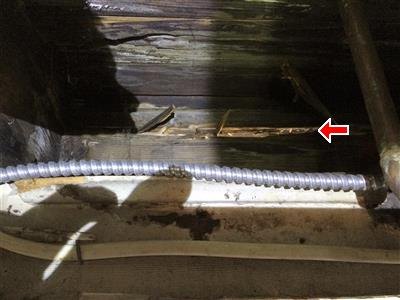
Water-damaged wood rim joist beneath a steel basement entrance door, marked by a red arrow, with an armored cable running across.
A red arrow marks water damage to the wood rim joist at the basement entrance, beneath the steel Bilco door. The report notes the door itself is badly rusted and recommends evaluation and repair by a licensed exterior door contractor.
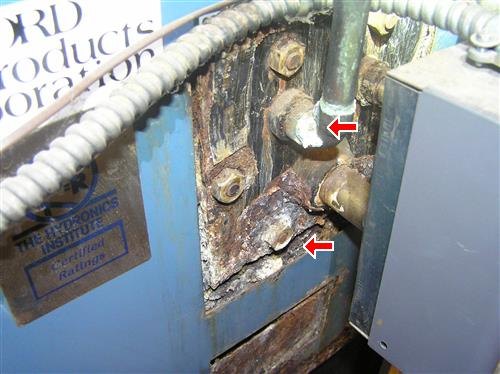
Heavily corroded pipe fittings on the side of a boiler, two points arrowed.
Arrows mark heavy corrosion at the boiler face plate, where the report finds the hot water coil corroded and leaking and the copper fittings corroded. It recommends evaluation and repair by a licensed plumbing contractor.
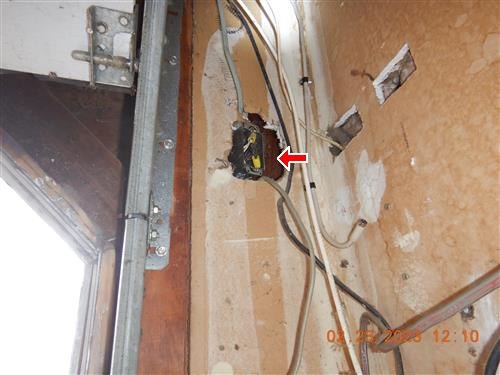
Uncovered electrical box beside a garage door frame, marked by a red arrow.
A red arrow marks an electrical box with its cover missing beside the garage entrance. The report lists several boxes missing covers here and recommends evaluation and repair by a licensed electrical contractor.

All three photographs are from Lou's own West Islip inspection reports, chosen because they show a building component and nothing that identifies a property or an owner.

From the West Islip files

More of what Lou has actually photographed on West Islip inspections. Open any note to learn what the finding means for a buyer — every link stays on this site.

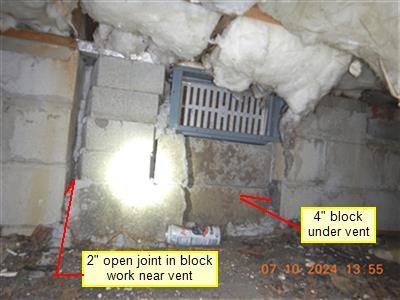
Crawlspace with concrete block piers, a metal vent, insulation overhead, and yellow annotation labels
Inspector labels in a crawlspace point out a two-inch open joint in the block work near a foundation vent and a four-inch block beneath the vent. Gaps and undersized blocks in supporting masonry are documented so a contractor can evaluate them.
Why this matters — the crawlspace

The crawlspace is where the floor structure, plumbing runs and half the wiring actually live — and the part of a house nobody visits between sales. New York requires the report to say what was and was not accessible, and why. The "not observed" rule, explained.

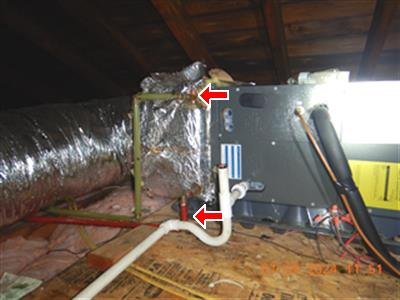
Attic air handler with foil-wrapped duct, red arrows marking uninsulated heat pipes.
Red arrows mark the bare heat pipes serving an air handler installed in the attic. The report notes these pipes need insulation and recommends repair by a licensed HVAC contractor.
Why this matters — the attic

Attics record a house's history: leaks the ceilings were painted over, ventilation that was never right, alterations that ended up there. It is usually the highest-value twenty minutes of the inspection. Why being there while Lou works is worth it.

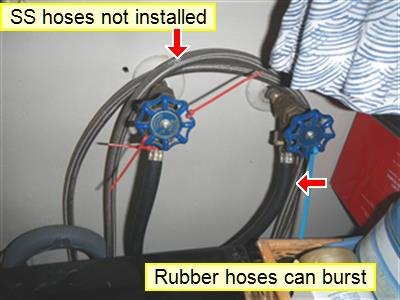
Two laundry shut-off valves with black rubber supply hoses and yellow labels about hose type
Inspector labels note that this washing machine is connected with rubber supply hoses instead of braided stainless steel ones. Rubber hoses are under constant water pressure and can burst, which is a common cause of home flooding.
Why this matters — supply plumbing

Supply plumbing is judged by material and era — and by the small evidence at the joints. Corrosion and mineral tracks at connections show slow weeping long before a failure. Moisture evidence, explained.

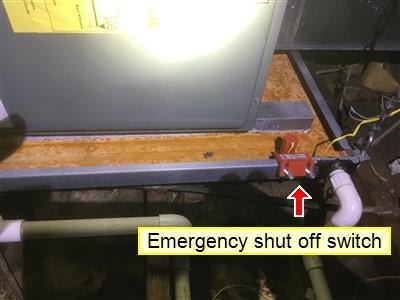
Red emergency shut-off switch mounted beside cooling and air handler equipment, marked with a red arrow and yellow label
A label and arrow identify the emergency shut-off switch at the cooling and air handler equipment. The report notes the very rusty drip pan is an indicator this switch is not working and recommends evaluation and repair by a licensed HVAC contractor.
Why this matters — why findings are photographed

Every photograph in a report exists to make a finding checkable — the point is not the picture, it is that you and your attorney can see exactly what the inspector saw. Read a complete sample report.

All photographs are from Lou's own inspection reports for jobs in this area, screened so nothing identifies a property or an owner.

Where this sits in Lou's territory

Lou covers Long Island, the five boroughs and Westchester from his base in Wantagh, and the archive behind these pages shows where that work has actually concentrated.

Also nearby: Massapequa · Dix Hills · all 26 towns.

Call Lou Text