Under contract and on a clock? Call 516-330-3870 Text Email

Inspect This Home Inspections Army Veteran Owned · NY Licensed
Suffolk County · the big lots

Home inspector in Dix Hills, NY

Between 2015 and 2025, Lou Rubino inspected 8 homes in Dix Hills. The hamlet's colonials and contemporaries went up mostly from the late 1960s onward, on lots that dwarf the quarter-acre South Shore — and a bigger house on a bigger lot is not just more of the same inspection. It is more systems, more roof, and more places for fifty years of ownership to leave marks.

Rated 5.0 on Google as of August 2026 · U.S. Army veteran owned · NY licence #16000039568 · 516-330-3870

Scale is the Dix Hills story

A 3,000-square-foot colonial carries roof planes, framing spans and mechanical systems a cape never had. In one Dix Hills attic, Lou found the roof plywood lifted off its rafters across four framing bays, pushing up the shingles above — a defect that shows from inside long before the roof surface gives it away, and the kind of thing a bigger house gives more room to hide.

Dix Hills also keeps the Suffolk arrangement: public water in the taps, but most houses handling their own wastewater on-site. On an acre lot the system has room to hide, which is one more reason its age and history belong in your questions to the seller.

Related: Septic and well, explained · What an inspection costs · Schedule an inspection.
What the inspection can examine here

  • The whole roof system, plane by plane — on a big colonial there is simply more of it, and the inspection covers all of it.
  • The panel — larger houses carry larger services, and the covers come off regardless.
  • Brick veneer and its movement joints — big walls show small movements first at the bottom.
  • The on-site wastewater system's age and history — what a standard inspection can and cannot establish.

Photographs from Dix Hills reports

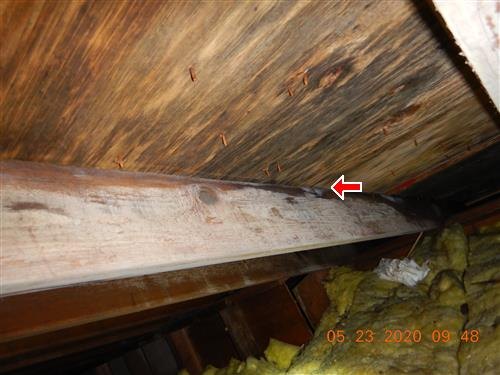
Attic roof sheathing meeting a wood framing member, with dark discoloration and a red arrow at the junction.
The arrow marks where the roof plywood has lifted off the framing in this attic — the report notes it is raised in several bays and is pushing up the shingles above. A roof contractor is recommended to evaluate and refasten it.
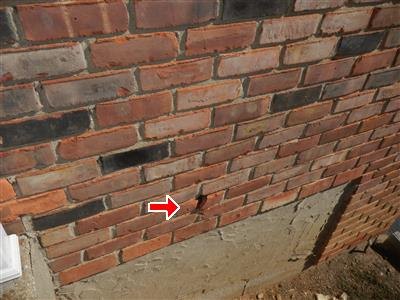
Brick veneer wall above a concrete foundation, with a red arrow at a broken brick that has a piece missing.
The arrow marks a broken brick in the middle of this front wall, recorded in the report alongside missing mortar at the corners of the brickwork. Small masonry defects like these are noted so they can be repaired before water works into the wall.
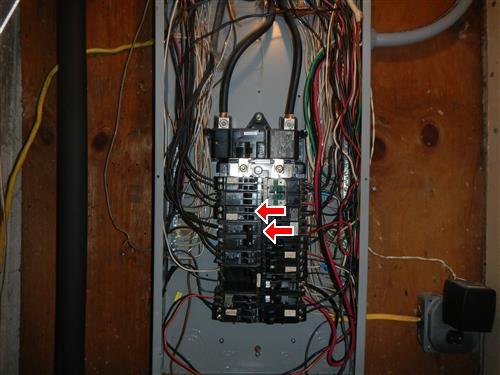
An open electrical panel densely wired, with two arrows marking breaker connections.
Two red arrows mark breakers inside this main panel: one breaker is double-lugged, with two wires under a single lug, and another is fed with an aluminum branch wire. The report recommends evaluation and repair by a licensed electrical contractor.

All three photographs are from Lou's own Dix Hills inspection reports, chosen because they show a building component and nothing that identifies a property or an owner.

From the Dix Hills files

More of what Lou has actually photographed on Dix Hills inspections. Open any note to learn what the finding means for a buyer — every link stays on this site.

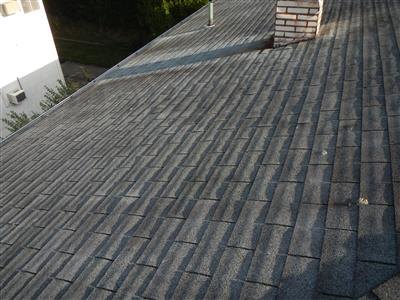
Gray asphalt shingle roof slopes meeting at a valley, with a vent pipe and brick chimney
A view across a 3-tab shingle roof, taken while walking it. The report notes the shingles are losing their mineral surface on one side, that two layers are already on the roof, and recommends putting money aside for a new roof in about five years.
Why this matters — roof wear

Asphalt and slate-type roofs age in legible stages: curling, cracking, slipped pieces, exposed fasteners. Reading the stage helps establish the visible wear and whether maintenance, repair or further evaluation is the honest next step. The report must say how the roof was examined.

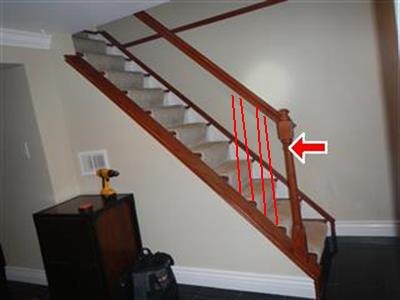
Wood staircase with red lines marking a section of railing missing its balusters, and a red arrow at the handrail
Red lines mark the open section of this stair railing where balusters are missing. The report notes the basement stairs railing needs balusters and recommends repair by a licensed carpenter.
Why this matters — why findings are photographed

Every photograph in a report exists to make a finding checkable — the point is not the picture, it is that you and your attorney can see exactly what the inspector saw. Read a complete sample report.

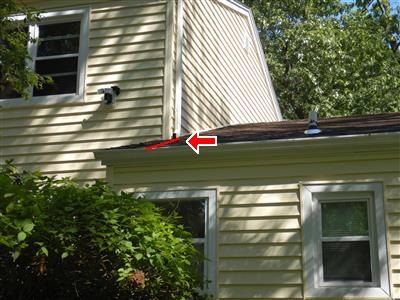
Red arrow and line marking a sag along the edge of a lower roof below a yellow-sided upper story
A red arrow and line mark the edge of a low roof over a rear entrance, where the roofline sags. The report notes the roof has a belly from a bowed rafter and recommends sistering the rafter, with evaluation and repair by a licensed carpenter.
Why this matters — the structure

Cracks and damaged framing are information: their pattern and extent tell the report whether further evaluation by an engineer or the right contractor is the honest next step. The report documents location and extent so change can be seen later. What a condition report does and does not rule on.

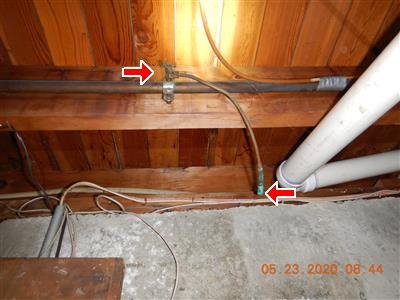
Red arrows at two fittings on copper tubing running along basement ceiling framing, date stamp visible
Red arrows mark an old tap valve on a water line and the fitting where a smaller line ties in. The report flags a leaking old water tap valve and a lawn sprinkler line with no check valve installed, and recommends evaluation and repair by a licensed plumbing contractor.
Why this matters — supply plumbing

Supply plumbing is judged by material and era — and by the small evidence at the joints. Corrosion and mineral tracks at connections show slow weeping long before a failure. Moisture evidence, explained.

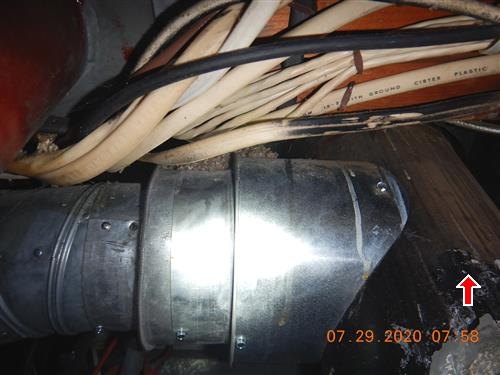
Bundle of wires draped over a large metal flue pipe in a dark utility closet, red arrow at lower right
A bundle of wires drapes directly across a metal flue pipe in a utility closet. The report notes the antenna wire is melting on the hot flue pipe and recommends evaluation and repair by a licensed HVAC contractor.
Why this matters — why findings are photographed

Every photograph in a report exists to make a finding checkable — the point is not the picture, it is that you and your attorney can see exactly what the inspector saw. Read a complete sample report.

All photographs are from Lou's own inspection reports for jobs in this area, screened so nothing identifies a property or an owner.

Where this sits in Lou's territory

Lou covers Long Island, the five boroughs and Westchester from his base in Wantagh, and the archive behind these pages shows where that work has actually concentrated.

Also nearby: West Islip · Huntington & Northport · all 26 towns.

Call Lou Text