Under contract and on a clock? Call 516-330-3870 Text Email

Inspect This Home Inspections Army Veteran Owned · NY Licensed
Suffolk County · colonial and high ranch

Home inspector in Kings Park, NY

In 2018, Lou Rubino inspected two homes in Kings Park — two jobs, each with a written report, and the photographs below come from them. The reports describe a colonial and a high ranch, about 30 years old.

Rated 4.9 on Google as of November 2026 · U.S. Army veteran owned · NY licence #16000039568 · 516-330-3870

What the Kings Park reports found

Lou’s two summaries flagged 16 items Repair or Replace, most for the exterior (6), roof, chimney and attic (5) and garage (3). Each report, newest first, as Lou wrote it up.

2018, a colonial: 6 items flagged: 3 roof, chimney and attic; 1 exterior; 1 kitchen. As recorded: gable roof, architectural and asphalt/fiberglass, seen from: walked, framed with 2 x 8 rafters; attic: pull down stairs in closet, storage and light in attic, fiberglass and r-19 insulation, ridge vents, soffit vents and thermostatically controlled fan ventilation; t-111 plywood siding, chimney: brick; poured concrete foundation, 2 x 8 and 2ea 2"x 10" x 3 main wood beams floor framing, steel lally columns, crawlspace: crawled; forced air heat on oil, 50 gallon (2-3 people) oil water heater (basement); 200-amp circuit breakers (Square D), romex wiring, copper supply pipes, public water, air conditioner unit; double-hung, thermal/insulated and casement windows, carpet, hardwood t&g and tile floors, wood cabinets, granite counters. Flagged, in Lou’s words: “Flashing joints are cracked on chimney”; “Rear side of chimney has cracked joints”; “Right side basement window wells are filled with leaf debris, this will inhibit drainage”; “Right side window upper sash is fogged”; “Cracked to right of master bedroom doorway”; “Safety Item: Basement steps need balusters 4" apart”; “Left side railing to 2nd floor is loose”; “Exhaust fan is vented into attic”; “Damper adjustment bracket is loose”. Also noted: “GFCI outlet behind toilet has open ground”; “Outlet to right of sink is not GFCI protected and has open ground”; “Jacuzzi is GFCI breaker protected in main panel”; “Water meter and shut off valve in lawn near curb”; “Main water shut off in house, basement right front corner”; “Fuel oil fill pipe and vent are on right side exterior”; “Electrical box at right front corner of property”; “Left side exterior of garage”. On the day: 51°F, clear, damp ground, rain in the three days before; the house faces north. Not present in this house: food waste disposer; gas meter; gas/lp firelogs and fireplaces; insulation under floor system; range hood; sump pump; trash compactor; vapor retarders; windows.

2018, a high ranch, about 30 years old: 10 items flagged: 5 exterior; 3 garage; 2 roof, chimney and attic. As recorded: hip roof, architectural and asphalt/fiberglass, seen from: walked, framed with 2 x 6 rafters; attic: pull down stairs, fiberglass and r-19 insulation, soffit vents, passive and whole house fan ventilation; wood shingle look and cement shingle wood and cement-fiber siding, chimney: brick; poured concrete foundation, supporting walls; hydronic heat on oil, hot water off the boiler; 100-amp circuit breakers (Murray), romex wiring, copper supply pipes, public water; casement, thermal/insulated and double-hung windows, hardwood t&g, carpet and tile floors, wood and laminate cabinets, laminate counters. Flagged, in Lou’s words: “Left side chimney cement cap is cracked and rain cap not installed”; “Brickwork needs pointing about 2 feet down from crown”; “When cement caps are replaced”; “Gutters have not been cleaned in years”; “A clogged leader and gutter system can lead to water damage to walls and ceilings and water intrusion into basements”; “Whole in cement shingle right side”; “Cedar shingle broken front wall”; “Corners broken on cement shingle left side”; “First floor entrance left side, has extreme sun damage”; “Metal weather stripping same door has been cut creating draft”; “Front door second floor has hole”; “Second floor, front bow window has dropped in elevation, causing side casement windows out of square and not to open”; “Braces under window are insufficient to support weight”; “Rear brick paver patio, bricks uneven sunk in elevation”; “Wood railroad tie border/ retaining wall is rotted out in many places”; “Safety Item: Raised brick patio needs hand rail in rear”; “Front concrete driveway is cracked in many places”; “Tree branches overhanging house right rear”; “Paint peeling on all eaves soffits and fascia boards from water overflowing from clogged gutters”; “Front fascia boards damaged from carpenter bees”. Also noted: “Floor and walls not visible, garage filled with storage”; “Counter has water damage and rotted through behind faucet”; “Clothes Dryer Vent Material”; “Ceramic floor missing marble door saddle”; “First floor laundry room paint peeling”; “Door needs stopper to prevent wall damage from door knob”; “Outlet is light fixture not GFCI protected”; “Soap dish missing in tub area”; “Rear wood deck and steps have water damage”; “Safety Item: Hand rail missing balusters”; “Deck pitched toward house”; “Left side concrete platform is cracked”. On the day: 35°F, cloudy, damp ground, no rain in the three days before; the house faces SE. Not inspected that day: floors; garage floor; insulation under floor system; visible electric wiring in attic. Not present in this house: basement windows; cooling and air handler equipment; electrical; fence; gas meter; gas/lp firelogs and fireplaces; presence of installed cooling source in each room; solid fuel heating devices; sump pump; vapor retarders; windows.

“Flagged” is HomeGauge’s Repair or Replace mark, not a verdict on the house. See a complete report.

Related: The Suffolk County page · What an inspection costs · Schedule an inspection.
What the inspection can examine here

  • The roof, chimney and attic — how the roof was observed is stated in the report, as New York requires, and the attic is entered wherever a hatch allows.
  • Siding, trim, flashing, grading and drainage — where water is being sent, and whether it is being sent at the house.
  • Supply and drain plumbing where it can be seen — materials, visible leaks, the water heater and its venting, and what moisture has already done.
  • Radon — a separate, optional test arranged alongside the inspection.

Photographs from Kings Park reports

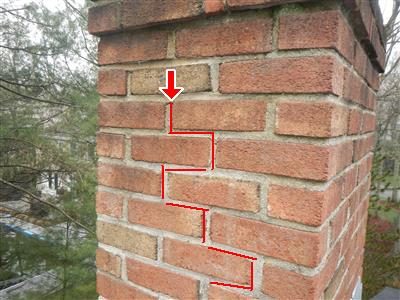
Brick chimney corner with a red arrow and stepped red lines tracing cracked mortar joints down the face.
Flashing joints are cracked on the chimney and the rear side has cracked joints, traced in red on the brickwork in the report's roof section.
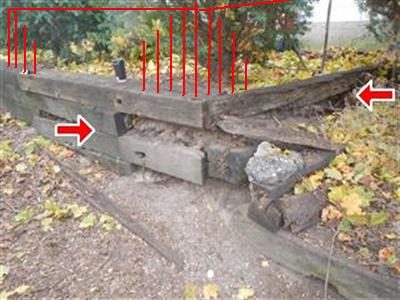
Wood railroad tie retaining wall with split, crumbling timbers, marked with red arrows and red hatching.
Wood railroad tie retaining wall is rotted out in many places, as labelled in the report's grading and retaining wall section.
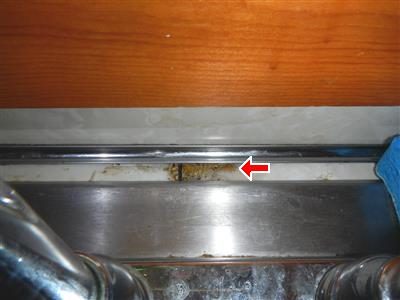
Kitchen counter edge behind a stainless faucet with a dark rotted patch, marked by a red arrow.
Counter has water damage and has rotted through behind the faucet, as recorded in the kitchen counters and cabinets item of the report.

All three photographs are from Lou's own Kings Park inspection reports, chosen because they show a building component and nothing that identifies a property or an owner.

Buying in Kings Park: the questions with sourced answers

Each answer is built from Kings Park’s own rows in public data — the Census, NYSDOH, NYSDEC, FEMA, the office that holds the permits — or from Lou’s reports, and cites its source. Data retrieved 1 November 2026.

How old are the houses in Kings Park?

Median year built in zip 11754: 1967 (Suffolk County: 1970). Of 7,078 units, the 1960s built the most, 32%; 5% is from 2000 on. Next come the 1970s at 20% and the 1950s at 16%. An older house is not a worse house, but its wiring, plumbing and roof were installed under different rules and replaced piecemeal, which is what the inspection looks for. Lou’s reports here: 30 years old. (ACS)

How are homes in Kings Park heated? Is an oil tank likely?

50% utility gas, 39% fuel oil or kerosene; fuel oil 39% against 45% county-wide. NYSDEC logs 165 petroleum spills at private homes in Kings Park since 1987, 55 since 2015. 5 were logged in 2012, the year of Hurricane Sandy. Ask about a tank, and for closure papers. A tank can be buried in the yard or sit in the basement, and a removed one should come with paperwork. Buried tanks are outside the standards New York sets for a home inspection, so the seller’s answer matters. (ACS, NYSDEC)

Is Kings Park mostly houses or apartments, owned or rented?

83% detached houses, 5% attached single-family houses, 4% buildings of 10 to 19 units; 86% owner-occupied (Suffolk County: 82%). Detached houses dominate, so most inspections here run from the roof to the foundation of one building. (ACS)

Is radon a concern in Kings Park?

Town of Smithtown: 64 basement tests, average 2.94 pCi/L, 8 at 4 or above (13%). Suffolk County: 8% of 576. First-floor tests there: 18, average 1.01. On the share at 4 or above, it ranks 1st of the county’s 10 towns and cities. The highest basement reading was 42.6 pCi/L. EPA’s action level is 4 pCi/L, and it advises testing every home whatever the area’s results. Radon testing is optional. (NYSDOH)

Has Kings Park flooded? Is the house in a flood zone?

34 flood-insurance claims from zip 11754 since 1978, most in 1979 (11): 124th of the 189 zips on these pages. A claim count describes the zip, not the house. Flood zones follow the address. Check the address on FEMA’s map. (OpenFEMA)

Who holds the permits and certificate of occupancy in Kings Park?

The Town of Smithtown Building Department. Your attorney usually runs the search. The inspection reports the condition of what is there and flags work that typically needs a permit, such as a finished basement, a dormer or a moved panel, so you know what to ask about.

Which code, water and sewer rules apply in Kings Park?

The New York State Uniform Code, the Suffolk County Water Authority and private wells, and the Sanitary Code rules on cesspools (no in-kind replacement since 2017) and I/A septic systems: county-wide, written once. They are the same for every town in Suffolk County, so they are set out there with their sources instead of on each page.

How much does a home inspection in Kings Park cost, and how fast is the report?

Lou quotes the actual property, not a flat rate — what drives the price is size, age and what is included. The written report arrives the same day as a rule; a large or complex house can run to the next morning. Call or text 516-330-3870.

Suffolk County, town by town

Every Suffolk County place with a page here, each with the real count from Lou's records. The Suffolk County page covers the county as a whole.

Where this sits in Lou's territory

Lou covers Long Island, the five boroughs and Westchester from his base in Wantagh, and the archive behind these pages shows where that work has actually concentrated.

Nearby towns Lou has inspected: Smithtown · Commack · Saint James · Hauppauge · Northport · Nesconset · all 250 towns.

Call Lou Text