What the South Slope reports found
Lou’s two summaries flagged 12 items Repair or Replace, most for the kitchen (4), roof, chimney and attic (3) and rooms (3). Each report, newest first, as Lou wrote it up.
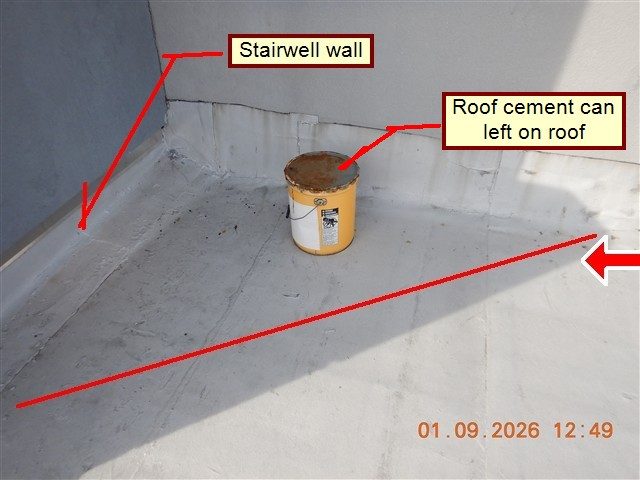
2025, a colonial, about 115 years old: 8 items flagged: 3 roof, chimney and attic; 2 kitchen; 2 rooms. As recorded: flat roof, rubber membrane, seen from: walked roof; attic: no storage, none found ventilation; cement stucco full brick siding; rock foundation, supporting walls; heat pump forced air heat on four, 50 gallon (2-3 people) electric water heater (basement and utility room); 200-amp circuit breakers (Eaton), BX wiring, copper supply pipes, public water, heat pump forced air; casement and thermal/insulated windows, hardwood t&g floors, laminate cabinets, quartz counters. Flagged, in Lou’s words: “Water diverter needed on roof up stream from stairwell housing”; “Stairwell roof needs leader and gutter system to prevent water from running onto roof door and into hallway”; “Rear main roof needs 6" gutter to prevent water from running dow rear of building”; “Safety Item: Roof storm door does not have closing piston and travel stop”; “Kitchen window cranks are loose”; “Left side refrigerator door hits cabinet panel when opening”; “Handrail to attic steps, cutout needs to be made by sheetrock ledge to prevent injury to hand when holding handrail”. Also noted: “Safety Item: Master bath tub still moves very easily. This will cause floor drain to leak over time”; “Tub spray wand drips on floor when placed in holder”; “Four inch stone back splash needed around perimeter of vanity counter”; “This will prevent water from running behind sink cabinets”; “Water pressure low at both sinks”; “Safety Item: Water heater is still missing TPR extension pipe”; “Gas meter in basement front utility room”; “Sub panel in 3rd floor hallway”; “Not tested connected to central alarms system and fire department”; “Too cold to test A/C temp needs to be above 60 degrees”; “Skylight crank rods missing in 3rd floor middle bedroom”; “Hood is vented out rear of building”; “Tub moves when pressed against”; “Spray wand drips on floor when placed on holder”; “Foundation where visible shows both stone and concrete”; “Pipe under floor show an obstruction about 17 ft back from trap”; “Pipe from trap forward toward sewer pipe shoes commercial debris in pipe”; “Whole house ground in basement, right front under main electric panel”; “Main breaker panel in basement right front wall next to meter”; “Master bath electric space heater, adjustment knob and on off switch not installed”. On the day: 45°F, cloudy, damp ground, rain in the three days before; the house faces north. Not inspected that day: carbon monoxide detectors; ceilings; cooling and air handler equipment; floors; insulation in attic; insulation under floor system; ranges/ovens/cooktops; roof structure and attic; smoke detectors; visible electric wiring in attic; walls. Not present in this house: basement windows; chimneys, flues and vents; food waste disposer; gas/lp firelogs and fireplaces; solid fuel heating devices; sump pump; trash compactor; vapor retarders; ventilation fans and thermostatic controls.
2024, a town home, about 104 years old: 4 items flagged: 2 kitchen; 1 rooms; 1 heating and cooling. As recorded: flat roof, rubber membrane, seen from: walked roof; attic: no storage, passive ventilation; rock and mortar, brick and cement stucco full brick, stone and stucco siding, chimney: brick; rock foundation, supporting walls; insulated ducts, 50 gallon x 2 gas (quick recovery) water heater (basement and utility room); 200-amp circuit breakers (Eaton Main Panel & Sub Panels), BX wiring, lead supply pipes, public water, air conditioner unit; double-hung and thermal/insulated windows, hardwood t&g, ceramic tile and wood floors, wood cabinets, quartz counters. Flagged, in Lou’s words: “Kitchen pantry door is cracked at upper hinge”; “Refrigerator set for 37 degrees, but only cooling to 50 degrees”; “None working in apartment”. Also noted: “Microwave second surface light bulb is out”; “Dryer in laundry room is 220 Volts”; “Custom built couch in basement over wall”; “Movie projector and screen not tested in basement”; “Access panel over tub to shut off water valve”; “Diverter valve leaks spraying water on tub shelf and flowing onto floor”; “Tub shower curtain bar missing”; “Left in basement outside of boiler room”; “Jacuzzi tub diverter valve is leaking”; “Did not operate jacuzzi tub because GFCI under tub was tripped”; “Sink drain pipe elbow is corroded”; “Toilet seat is loose and toilet flush handle linkage gets stuck open”; “Brick arches in basement are a structural part of the floor and hold up the main wood beam”; “Whole house trap in basement closet right front corner”; “GE water heater is 14 years old”; “Safety Item: Water heaters missing exhaust bonnets”; “Elbows are sitting right over water heater exhaust flues, because of a height problem”; “They are still not low enough to have upward draft, flue pipe is level to downward to chimney”; “Exhaust elbows are leaking exhaust gases into boiler room”; “Water heaters with a lower overall height should have been used”. On the day: 77°F, clear, damp ground, no rain in the three days before; the house faces SW. Not inspected that day: ceilings; insulation in attic; insulation under floor system; roof structure and attic; service entrance conductors; visible electric wiring in attic. Not present in this house: attic pulldown steps; gas/lp firelogs and fireplaces; range hood; trash compactor; vapor retarders; ventilation fans and thermostatic controls; windows.
“Flagged” is HomeGauge’s Repair or Replace mark, not a verdict on the house. See a complete report.
Related: The Brooklyn page · What an inspection costs · Schedule an inspection.