What the Flatlands reports found
Lou’s two summaries flagged 25 items Repair or Replace, most for the exterior (11), roof, chimney and attic (7) and kitchen (3). Each report, newest first, as Lou wrote it up.
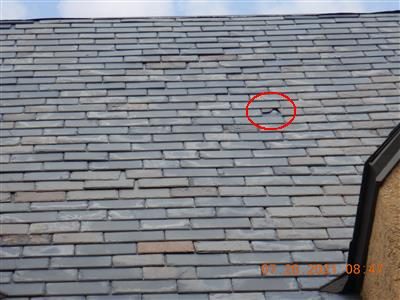
2021, a gothic: 15 items flagged: 8 exterior; 4 roof, chimney and attic; 2 rooms. As recorded: gambrel roof, slate, seen from: ladder, framed with 3 x 10 rafters; attic: no storage, gable vents and soffit vents ventilation; cement stucco cement stucco siding, chimney: brick and masonry stucco; masonry block foundation, masonry block and supporting walls; 40 gallon (1-2 people) electric water heater (kitchen); 200-amp circuit breakers (Eaton), BX wiring, copper supply pipes, public water; casement windows, carpet and vinyl floors, wood cabinets, granite counters. Flagged, in Lou’s words: “Old slate roof removed in 2024 and architectural shingle installed but no ice cleats installed for steep slope”; “Left rear upper roof near back wall shingle are not laying flat and have raised edges”; “Right rear upper roof near back wall shingle are not laying flat and have raised edges”; “Right front roof over front entrance needs metal diverter to short gutter, not done”; “Left front roof over front entrance needs metal diverter into short gutter, not done”; “Right front upper roof needs short leader and gutter to lower gutter and diverter installed on lower short gutter, not done”; “Left front upper roof needs short leader and gutter to lower gutter and diverter installed on lower short gutter, not done”; “Right rear upper roof near rear wall, no leader and gutter installed”; “Left rear upper roof near rear wall, no leader and gutter installed”; “Rule of thumb is for every 25' of gutter a down spout and leader pipe is needed especially for large pitched roofs”; “Right side upper roof gable, needs a diverter to gutter”; “Left side rear gutter, needs down spout and leader pipe, on forward side of roof gable”; “Right side door frame paint is peeling”; “Termite damage to left front door and inside frame”; “Right rear window has broken glass”; “Roof shingle on shed are falling off”; “Safety Item: Smoke and carbon-monoxide detectors should be changed every 5 years, not renewed after last inspection”; “Right front upper roof broken and loose slate”; “R/S rear main roof rear broken slate”; “Right rear upper roof, near dormer slate is loose & broken”. Also noted: “Stucco on chimney repaired in 2024”; “Safety Item: Steel plate in front walkway has dropped causing a trip hazard”; “Whole house trap In kitchen floor near sink”; “Water heater is 26 years old”; “Rear stage office is powered by BX cable pig tailed to ceiling boxes”; “Sub panel in basement left rear room”; “See Gordon balancing chart and Gordon venting valve sizes”. On the day: 85°F, hot and humid, damp ground, rain in the three days before; the house faces south. Not inspected that day: ceilings; floors; insulation in attic; insulation under floor system; roof structure and attic; visible electric wiring in attic. Not present in this house: cooling and air handler equipment; dishwasher; food waste disposer; gas/lp firelogs and fireplaces; microwave cooking equipment; normal operating controls; outlets & light fixtures; presence of installed cooling source in each room; range hood; roof ventilation; solid fuel heating devices; sump pump; trash compactor; vapor retarders; ventilation fans and thermostatic controls; windows.
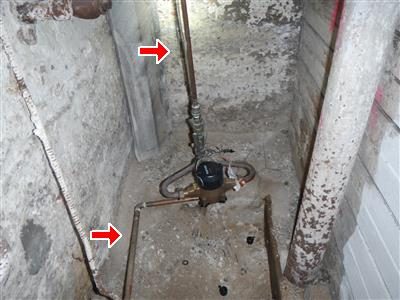
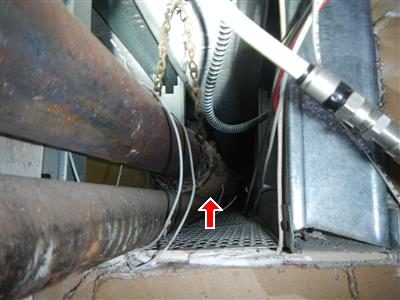
2015, a colonial, about 90 years old: 10 items flagged: 3 roof, chimney and attic; 3 exterior; 3 kitchen. As recorded: gable and flat roof, 3-tab fiberglass and rubber membrane, seen from: walked roof; attic: scuttle hole sealed shut, gable vents ventilation; clapboard vinyl siding, chimney: brick; poured concrete foundation, 2 x 10 floor framing, supporting walls, crawlspace: no access; 40 gallon (1-2 people) gas (quick recovery) water heater (basement, utility room and washer dryer room); 100-amp circuit breakers (General Electric), BX wiring, copper supply pipes, public water, window AC; double-hung windows, parquet and hardwood t&g floors, wood cabinets, laminate counters. Flagged, in Lou’s words: “Rear hatch to flat roof located in closet of right rear bedroom. Hatch was sealed shut”; “Back face of chimney brickwork needs to be pointed. One flue pipe is damaged. No rain caps present”; “Hole for down spout between buildings is too small to accept all the water that is running off both roofs”; “Down spout pipe and leader is too small”; “Gutter for lower roof is filled with leafs and debris”; “Front storm door hits frame and lock is loose”; “Front concrete step is broken and pulling away”; “Front brick stoop loose brick and open joints”; “Base cabinet door is missing to left side of sink”; “Main setting timer is broken”; “On of knob switch is broken”; “Water damage and cracked”; “Water damage to ceiling in sun porch left front corner. See item 1.4 to correct water problem”; “See picture of hardwood tread with no joints and bull-nose edge”; “Handle missing from door to front hallway”; “Marble Saddle broken at doorway from front hallway to living room”; “Door handle loose from kitchen to basement entrance”; “Towel bar missing and left side holder missing”; “Door missing from sink cabinet”; “Asbestos like insulation on steam pipe in basement in pipe enclosure down middle of basement ceiling”. Also noted: “Hatch located in front bedroom closet. Attic was inaccessible hatch covered over and sealed”; “Water supply pipe in house is too small”; “Dining room and two bedrooms only”. On the day: 36°F, clear, frozen, damp ground, rain in the three days before; the house faces east. Not inspected that day: insulation in attic; microwave cooking equipment; plumbing water faucets; roof structure and attic; ventilation fans and thermostatic controls; visible electric wiring in attic. Not present in this house: ceramic floor; dishwasher; food waste disposer; gas/lp firelogs and fireplaces; insulation under floor system; outlets; presence of installed cooling source in each room; solid fuel heating devices; sump pump; trash compactor; windows.
“Flagged” is HomeGauge’s Repair or Replace mark, not a verdict on the house. See a complete report.
Related: The Brooklyn page · What an inspection costs · Schedule an inspection.