Under contract and on a clock? Call 516-330-3870 Text Email

Inspect This Home Inspections Army Veteran Owned · NY Licensed
Brooklyn · the brownstone belt

Home inspector in Bedford-Stuyvesant, NY

Between 2013 and 2026, Lou Rubino inspected 23 homes in Bedford-Stuyvesant — more than in any other Brooklyn neighbourhood. Bed-Stuy's blocks of Victorian rowhouses are over a century old, and at that age a house is not a product; it is a record of everything that has been done to it, and the inspection is how you read it.

Rated 5.0 on Google as of August 2026 · U.S. Army veteran owned · NY licence #16000039568 · 516-330-3870

Twenty-three houses in, the patterns are familiar

Renovation is the defining fact of the current market: houses gutted and refinished, sometimes beautifully, sometimes over the top of exactly the conditions a buyer most needed to know about. New tile over old walls, new walls over old plumbing — where a surface has failed early, what is behind it is the real finding.

The lot lines matter too. Party walls, shared side passages, and masonry that has been moving slowly for a hundred years all belong in the report with their movement traced, not summarised. A century-old crack and a young one can look identical in a photograph. Tracing them properly — and saying plainly when further evaluation by an engineer is the right next step — is the inspector's job.

Related: How Lou inspects a brownstone · What an inspection costs · Schedule an inspection.
What the inspection can examine here

  • Behind renovated surfaces, wherever they have already failed — an early failure is a window into the work.
  • Party walls and side passages — masonry movement gets traced, and its pattern described.
  • Roof decks and their supports — what was added above a century-old roof, and how.
  • The full brownstone scope — how Lou inspects a brownstone, end to end.

Photographs from Bedford-Stuyvesant reports

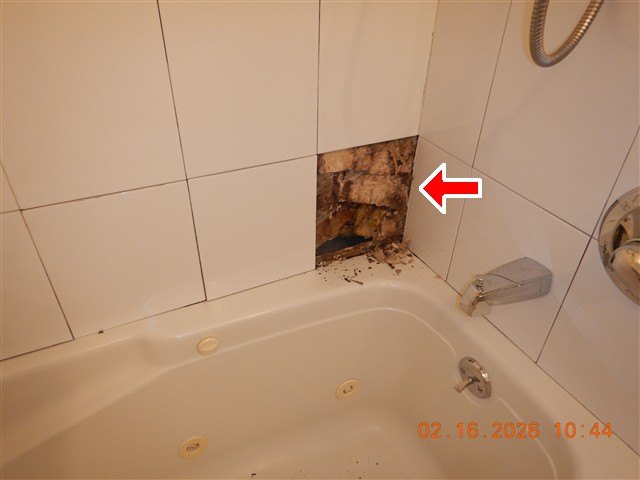
A bathtub surround with one ceramic tile removed, red arrow at the exposed wall cavity.
A red arrow marks the wall cavity behind a ceramic tile the owner authorized the inspector to remove from the tub wall. Mold was evident on the back of the tile and on the sheetrock and insulation behind it, and samples went to the lab.
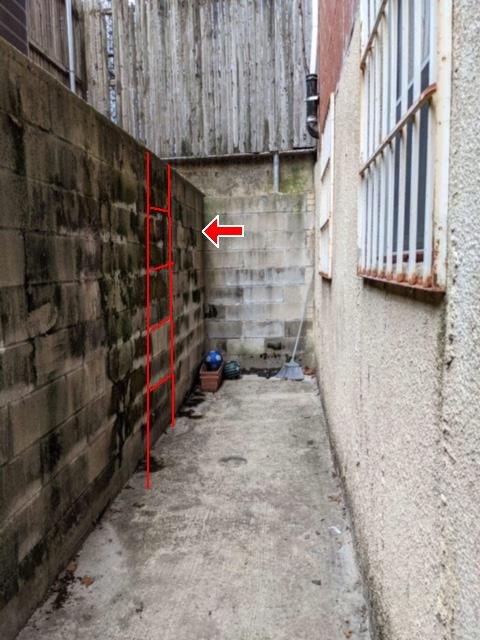
A narrow below-grade passage between buildings with a ladder outline drawn in red on the block wall.
The red lines sketch where a fire egress ladder is needed on the block wall of this below-grade sitting area outside the rear basement door. The report flags the missing ladder as a safety item for a licensed contractor to address.
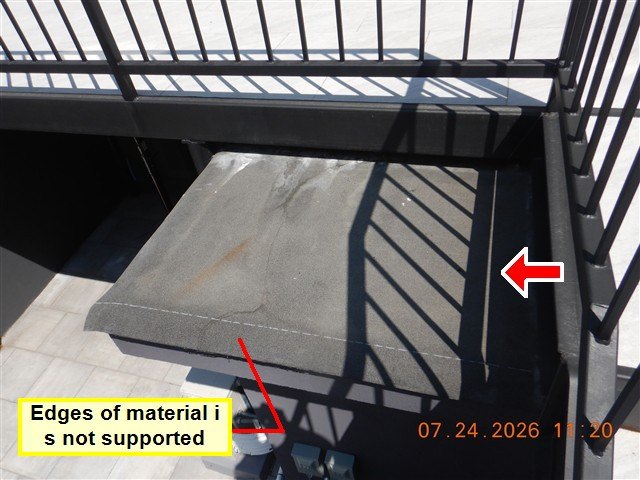
A small extension roof beside an iron railing, with a burned-in label reading 'Edges of material is not supported'.
The label marks roofing material over a small first-floor extension whose edges are not supported. The report notes the material has no mineral surface, looks like underlayment, and does not appear to be glued down — referred to a licensed roofing contractor.

All three photographs are from Lou's own Bedford-Stuyvesant inspection reports, chosen because they show a building component and nothing that identifies a property or an owner.

From the Bedford-Stuyvesant files

More of what Lou has actually photographed on Bedford-Stuyvesant inspections. Open any note to learn what the finding means for a buyer — every link stays on this site.

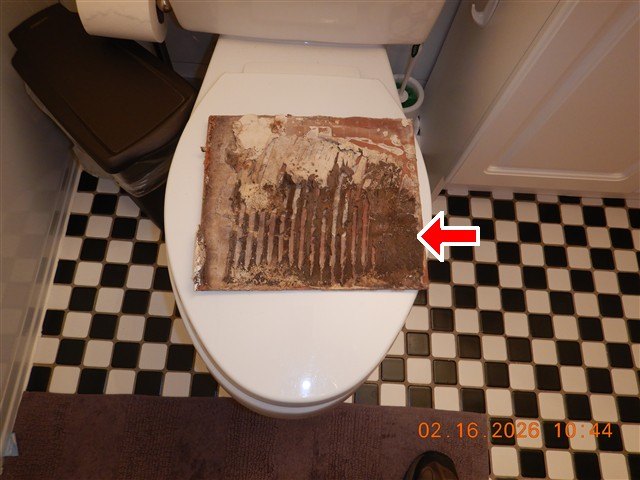
The back of a removed ceramic tile resting on a toilet lid, mold along the adhesive ridges, marked with a red arrow.
A red arrow marks mold on the back of a ceramic tile the inspector removed from the tub wall with the owner's permission. The report notes mold was evident on the back of the tile and on the sheetrock and insulation behind it.
Why this matters — interior moisture

Interior staining, failed tile and soft surfaces are the end of a story that started somewhere else. The inspection's job is to find the start — and to say whether the evidence looks active or historical. Water damage and moisture, explained.

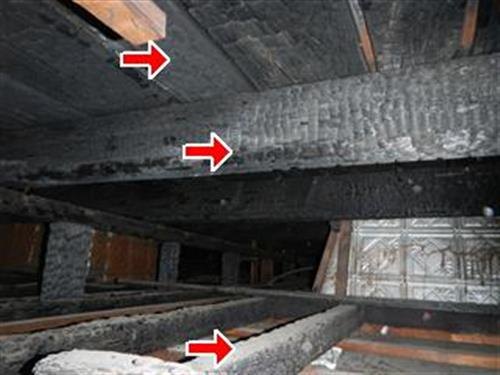
Charred roof rafters and a beam viewed from below, three red arrows at burned areas.
Red arrows mark extensive fire damage on the roof rafters and ceiling joists above this space. The report recommends evaluation and replacement by licensed framing and roofing contractors.
Why this matters — the structure

Cracks and damaged framing are information: their pattern and extent tell the report whether further evaluation by an engineer or the right contractor is the honest next step. The report documents location and extent so change can be seen later. What a condition report does and does not rule on.

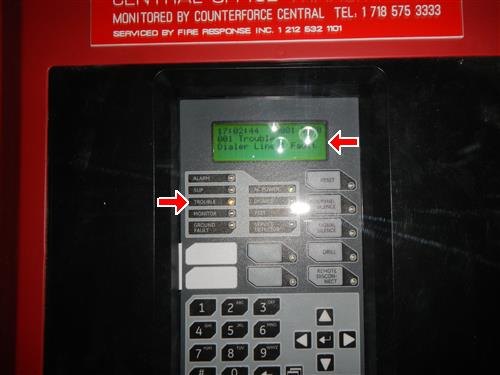
Fire alarm control panel keypad with red arrows at trouble light and display message
Red arrows mark the lit trouble light and the fault message on this fire alarm panel. The report records fault code 001 on the dialer line to the fire department as a fire-safety caution, with repair referred to a licensed sprinkler alarm contractor.
Why this matters — why findings are photographed

Every photograph in a report exists to make a finding checkable — the point is not the picture, it is that you and your attorney can see exactly what the inspector saw. Read a complete sample report.

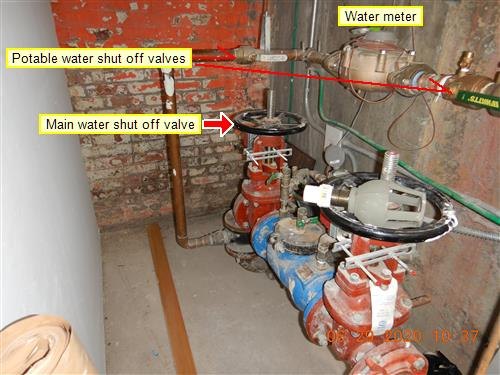
Water meter and large red shutoff valves with yellow labels and arrows
Yellow labels identify the water meter, the potable water shutoff valves, and the main water shutoff valve in this utility area. Knowing exactly where these valves are matters most in a plumbing emergency, so a report calls them out.
Why this matters — supply plumbing

Supply plumbing is judged by material and era — and by the small evidence at the joints. Corrosion and mineral tracks at connections show slow weeping long before a failure. Moisture evidence, explained.

All photographs are from Lou's own inspection reports for jobs in this area, screened so nothing identifies a property or an owner.

Where this sits in Lou's territory

Lou covers Long Island, the five boroughs and Westchester from his base in Wantagh, and the archive behind these pages shows where that work has actually concentrated.

Also nearby: Crown Heights · Bushwick · Clinton Hill · all 26 towns.

Call Lou Text