Under contract and on a clock? Call 516-330-3870 Text Email

Inspect This Home Inspections Army Veteran Owned · NY Licensed
Brooklyn · apartment

Home inspector in East Flatbush, NY

Between 2018 and 2020, Lou Rubino inspected two homes in East Flatbush — two jobs, each with a written report, and the photographs below come from them. The reports describe an apartment house and a colonial.

Rated 4.9 on Google as of November 2026 · U.S. Army veteran owned · NY licence #16000039568 · 516-330-3870

What the East Flatbush reports found

Lou’s two summaries flagged 14 items Repair or Replace, most for the exterior (8), roof, chimney and attic (4) and garage (1). Each report, newest first, as Lou wrote it up.

2020, a colonial, over 80 years old: 9 items flagged: 6 exterior; 2 roof, chimney and attic; 1 garage. As recorded: hip roof, architectural and asphalt/fiberglass, seen from: ladder, framed with 2 x 6 rafters; attic: attic hatch in middle bedroom closet, vermiculite insulation, ridge vents and soffit vents ventilation; brick full brick siding, chimney: brick; poured concrete foundation, supporting walls; steam boiler heat on natural gas, 50 gallon (2-3 people) gas (quick recovery) water heater (basement and utility room); 100-amp circuit breakers (General Electric), BX wiring, copper supply pipes, public water; double-hung, thermal/insulated and awning windows, parqet, laminate and tile floors, wood cabinets, cast iron, porcelain and laminate counters. Flagged, in Lou’s words: “Cement chimney cap is cracked and needs pointing”; “Its is good practice to have a down spout for every 25' of leader pipe”; “Left side of garage gutter filled with debris and vines”; “Right side of garage needs leader and gutter system”; “Right front gutter filled with debris”; “Lentil irons over front windows are rust-jacking brickwork”; “Front wood door needs to be stripped and painted”; “Right side upper window needs paint”; “Crack in left side bedroom window sill”; “Rear raised concrete patio, brick support column, top course is crumbling”; “Concrete top step is cracked at riser”; “Brick steps, rear support wall is crumbling”; “Concrete rail has separated from brick work”; “Brick fence on rear patio has many cracked and loose brick”; “Crack in joint at side wall of front granite walk”; “Large accumulation of leaves on platform of basement steps will clog drain and flood basement”; “Water accumulating in driveway near rear raised patio”; “Front fascia boards need paint both sides”; “Soffit on three sides needs venting”; “Water damage to window frame left side”. Also noted: “Perforated cover missing from whole house trap vent pipe on left front exterior wall”; “Hot water return pipe to boiler is berried in concrete”; “Water leak on heat piping at left rear of boiler”; “Dinning room forward radiator did not get hot”; “Kitchen and living room radiators were very slow”; “See steam system balancing chart”. On the day: 89°F, hot and humid, dry ground, no rain in the three days before; the house faces south. Not inspected that day: basement windows; electrical; floors; garage door operators; garage floor; garage walls; insulation under floor system; windows. Not present in this house: cooling and air handler equipment; gas/lp firelogs and fireplaces; normal operating controls; outlets & fixtures; presence of installed cooling source in each room; solid fuel heating devices; sump pump; vapor retarders; ventilation fans and thermostatic controls.

2018, an apartment house: 5 items flagged: 2 roof, chimney and attic; 2 exterior; 1 kitchen. As recorded: flat roof, rubber membrane, seen from: walked; attic: no storage, none found ventilation; brick full brick and masonry siding, chimney: brick; poured concrete foundation, supporting walls; steam boiler heat on oil, hot water off the boiler; 60-amp circuit breakers (General Switch), conduit wiring, cast iron supply pipes, public water, window AC; double-hung and thermal/insulated windows, hardwood t&g and terazo floors, laminate cabinets, silestone counters. Flagged, in Lou’s words: “Roof is over 15 years old”; “Roof needs a new coat of silver paint”; “Debris left on roof in corner, near elevator room”; “Ceramic parapet wall copping need pointing to right of fire-escape”; “Door to elevator mechanical room on roof is rotted on bottom”; “Fire-escape is rusting and in need of paint”; “Fire-escape rusting near top platform”; “Master bedroom window fogged up”. Also noted: “Stove has 110 volt electric outlet”; “Caution Safety Item: Left side fire- escape window won't stay up”; “Only one outlet in each bedroom”; “Not enough outlets in apartment”. On the day: 45°F, cloudy, damp ground, rain in the three days before; the house faces west. Not inspected that day: ceilings; cooling and air handler equipment; insulation under floor system; main water shut-off device; plumbing water faucets; presence of installed cooling source in each room; roof structure and attic; whole house trap. Not present in this house: basement windows; dishwasher; exhaust fan; food waste disposer; gas/lp firelogs and fireplaces; insulation in attic; microwave cooking equipment; pantry/closet doors; solid fuel heating devices; sump pump; trash compactor; vapor retarders; ventilation fans and thermostatic controls; visible electric wiring in attic; windows.

“Flagged” is HomeGauge’s Repair or Replace mark, not a verdict on the house. See a complete report.

Related: The Brooklyn page · What an inspection costs · Schedule an inspection.
What the inspection can examine here

  • Kitchen plumbing, GFCI protection and the built-in appliances, run through their normal cycles.
  • The roof, chimney and attic — how the roof was observed is stated in the report, as New York requires, and the attic is entered wherever a hatch allows.
  • The panel, with the readily accessible covers off — New York requires it — and the visible wiring, outlets and grounding.
  • Radon — a separate, optional test arranged alongside the inspection.

Photographs from East Flatbush reports

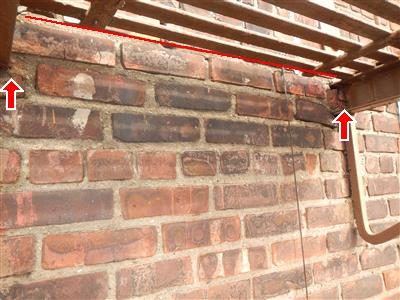
Brick wall under a fire-escape platform with a red line and two red arrows marking loose brickwork at the anchors.
Near the top fire-escape platform, the brickwork anchoring the fire-escape is loose. Red arrows mark the affected courses.

The photograph is from Lou's own East Flatbush inspection report, chosen because it shows a building component and nothing that identifies a property or an owner.

Buying in East Flatbush: the questions with sourced answers

Each answer is built from East Flatbush’s own rows in public data — the Census, NYSDOH, NYSDEC, FEMA, the office that holds the permits — or from Lou’s reports, and cites its source. Data retrieved 1 November 2026.

How old are the houses in East Flatbush?

Median year built in zip 11210: 1941 (Brooklyn: 1943). Of 22,817 units, 49% predates 1940; 6% is from 2000 on. Next come the 1950s at 16% and the 1940s at 13%. An older house is not a worse house, but its wiring, plumbing and roof were installed under different rules and replaced piecemeal, which is what the inspection looks for. (ACS)

How are homes in East Flatbush heated? Is an oil tank likely?

79% utility gas, 7% electricity; fuel oil 7% against 7% county-wide. NYSDEC logs Brooklyn home oil spills under the borough, not East Flatbush. A gas conversion can leave a tank behind. An abandoned tank is most likely in a house that was converted from oil. Buried tanks are outside the standards New York sets for a home inspection, so the seller’s answer matters. (ACS, NYSDEC)

Is East Flatbush mostly houses or apartments, owned or rented?

24% buildings of 50 or more units, 19% detached houses, 17% buildings of 20 to 49 units; 42% owner-occupied (Brooklyn: 30%). With 41% of units in buildings of 20 or more, many purchases here are apartments: the inspection covers the unit, and the roof, plant and risers belong to the board. Lou’s jobs here included a co-op apartment. (ACS)

Is radon a concern in East Flatbush?

Brooklyn (reported by borough): 528 basement tests, average 2.07 pCi/L, 54 at 4 or above (10%). First-floor tests there: 116, average 0.88. The highest basement reading was 41.2 pCi/L. EPA’s action level is 4 pCi/L, and it advises testing every home whatever the area’s results. Radon testing is optional. (NYSDOH)

Has East Flatbush flooded? Is the house in a flood zone?

48 flood-insurance claims from zip 11210 since 1978, most in 1980 (11): 104th of the 189 zips on these pages. A claim count describes the zip, not the house. Flood zones follow the address. Check the address on FEMA’s map. (OpenFEMA)

Who holds the permits and certificate of occupancy in East Flatbush?

The NYC Department of Buildings. Look the address up on BIS or DOB NOW. Your attorney usually runs the search. The inspection reports the condition of what is there and flags work that typically needs a permit, such as a finished basement, a dormer or a moved panel, so you know what to ask about.

Which code, water and sewer rules apply in East Flatbush?

The New York City Construction Codes, the NYC Department of Buildings records and NYC water and sewer: county-wide, written once. They are the same for every town in Brooklyn, so they are set out there with their sources instead of on each page.

How much does a home inspection in East Flatbush cost, and how fast is the report?

Lou quotes the actual property, not a flat rate — what drives the price is size, age and what is included. The written report arrives the same day as a rule; a large or complex house can run to the next morning. Call or text 516-330-3870.

Brooklyn, town by town

Every Brooklyn place with a page here, each with the real count from Lou's records. The Brooklyn page covers the county as a whole.

Where this sits in Lou's territory

Lou covers Long Island, the five boroughs and Westchester from his base in Wantagh, and the archive behind these pages shows where that work has actually concentrated.

Nearby towns Lou has inspected: Flatbush · Parkville · Ditmas Park · Kensington · Prospect Park South · Prospect Lefferts Gardens · all 250 towns.

Call Lou Text