Under contract and on a clock? Call 516-330-3870 Text Email

Inspect This Home Inspections Army Veteran Owned · NY Licensed
Brooklyn · rowhouses and limestones

Home inspector in Crown Heights, NY

Between 2015 and 2026, Lou Rubino inspected 15 homes in Crown Heights. The neighbourhood mixes turn-of-the-century limestones and brick rows with a newer wave of infill construction — so on one block Lou may be dating hundred-year-old millwork, and on the next, checking how a building finished last decade is actually holding up.

Rated 5.0 on Google as of August 2026 · U.S. Army veteran owned · NY licence #16000039568 · 516-330-3870

Old fabric and new construction fail differently

In the old stock, original details are both the value and the work: plaster, millwork, glass-panelled doors and staircases that survive nowhere else. Lou marks what is damaged, what is worn and what is simply old — three different categories that a renovation quote will happily blur together.

New construction earns no free pass. Fresh brick facades develop hairline cracking above lintels within a few years when details were rushed, and a young building's warranty period is exactly when you want that found. The licence and the scope are the same for both; the eye has to change.

Related: How Lou inspects a brownstone · What an inspection costs · Schedule an inspection.
What the inspection can examine here

  • Original fabric, graded honestly — damaged, worn, or simply old are three different findings.
  • Newer facades — young buildings get inspected too, lintels first.
  • Rooftop work — railings, decks and additions above old rows are checked as structure.
  • The full rowhouse scope — what a century-old Brooklyn house asks of an inspection.

Photographs from Crown Heights reports

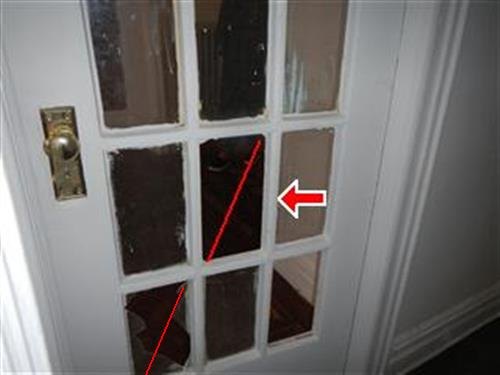
A white-painted glass-panelled interior door with red lines tracing panes where glass is missing.
Red lines trace panes where glass is missing from this glass-panelled French door. The report records the missing glass and recommends repair by a licensed door contractor.
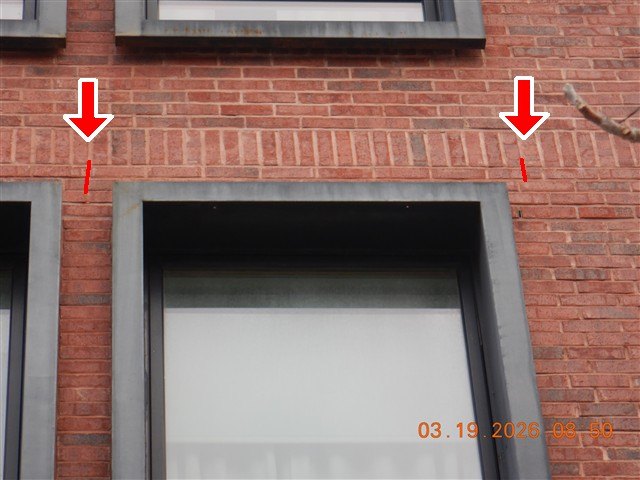
A newer red-brick facade with red arrows marking the bed joints beside dark metal window surrounds.
The arrows sit on the brickwork beside the window heads, where the report finds too few weep holes — the small openings that let trapped water drain back out of a masonry wall. It recommends a brick mason add more on either side of the windows to prevent water intrusion.
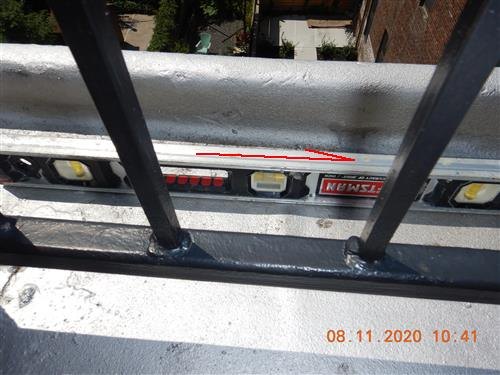
A spirit level lying in a silver-coated built-in gutter at a roof edge, seen through an iron railing, with a red line showing the slope.
A level laid in the built-in gutter at this roof edge shows it pitched away from the downspout opening, so water cannot reach its drain. The report recommends replacing this gutter with a hanging gutter that drains properly.

All three photographs are from Lou's own Crown Heights inspection reports, chosen because they show a building component and nothing that identifies a property or an owner.

From the Crown Heights files

More of what Lou has actually photographed on Crown Heights inspections. Open any note to learn what the finding means for a buyer — every link stays on this site.

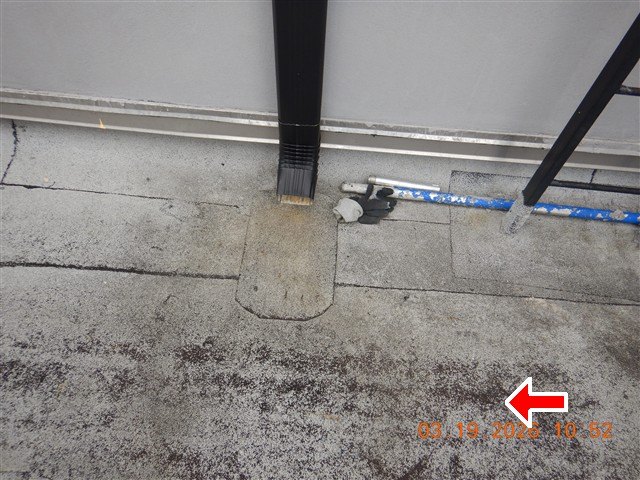
Black downspout ending on a granular flat roof surface with a patched strip, red arrow, date stamp.
A leader pipe from an upper roof discharges straight onto this flat roof, and the arrow marks where the protective mineral surface is worn near its elbow. The report calls for a splash block to take the force of the discharge.
Why this matters — the flat roof

A flat roof hides everything from the street: membrane seams, patches, drainage and parapet condition. Patching is normal maintenance — the report records what condition the membrane shows today and whether repair or further evaluation is the honest next step. How roofs are examined and reported.

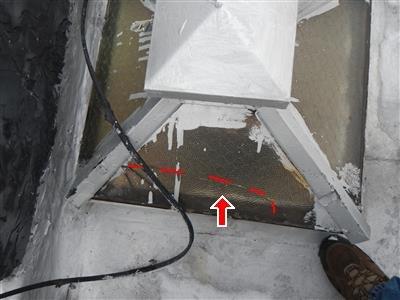
Pyramid-shaped skylight with wired glass on a roof, red dashed line and arrow on one panel.
The dashed markup traces a crack running across the wired glass of this rooftop skylight. The report records the cracked skylight glass and recommends repair by a roof contractor.
Why this matters — the flat roof

A flat roof hides everything from the street: membrane seams, patches, drainage and parapet condition. Patching is normal maintenance — the report records what condition the membrane shows today and whether repair or further evaluation is the honest next step. How roofs are examined and reported.

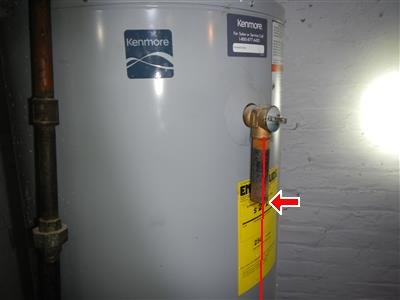
Kenmore water heater with a relief valve on its side, red line and arrow markup.
The red line traces the discharge pipe on this water heater's temperature and pressure relief valve, which the report finds too short and ending in pipe threads. That pipe exists to carry scalding discharge safely downward, so the report recommends a plumbing contractor correct it.
Why this matters — the water heater

Water heaters have a known service life, and their installation — clearance, venting, the gas connection, the pan — matters as much as their age. All of it is checked where it sits. What the write-up looks like.

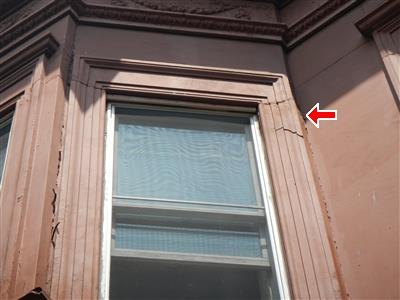
Exterior of a brownstone window with ornate surround, red arrow at cracked material near the frame.
The arrow marks cracked and separating material at the edge of this window's masonry surround. Openings in the joint between window frame and facade let water into the wall, so each one is recorded for sealing or repair.
Why this matters — the exterior envelope

Siding, trim, masonry and parged walls are the building's raincoat, and cracks or failed mortar can give water a way in. The report documents their location and pattern so the right contractor or specialist can evaluate them when warranted. Where water gets in, explained.

All photographs are from Lou's own inspection reports for jobs in this area, screened so nothing identifies a property or an owner.

Where this sits in Lou's territory

Lou covers Long Island, the five boroughs and Westchester from his base in Wantagh, and the archive behind these pages shows where that work has actually concentrated.

Also nearby: Bedford-Stuyvesant · Prospect Heights · Prospect Lefferts Gardens · all 26 towns.

Call Lou Text