Buying in Carnegie Hill: the questions with sourced answers
Each answer is built from Carnegie Hill’s own rows in public data — the Census, NYSDOH, NYSDEC, FEMA, the office that holds the permits — or from Lou’s reports, and cites its source. Data retrieved 1 November 2026.
How old are the houses in Carnegie Hill?
Median year built in zip 10128: 1960 (Manhattan: 1951). Of 35,940 units, 36% predates 1940; 6% is from 2000 on. Next come the 1970s at 17% and the 1980s at 13%. An older house is not a worse house, but its wiring, plumbing and roof were installed under different rules and replaced piecemeal, which is what the inspection looks for. Lou’s reports here: 90 years old. (ACS)
How are homes in Carnegie Hill heated? Is an oil tank likely?
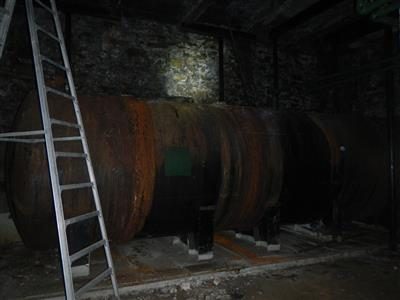
52% utility gas, 24% electricity; fuel oil 15% against 15% county-wide. NYSDEC logs Manhattan home oil spills under the borough, not Carnegie Hill. A gas conversion can leave a tank behind. An abandoned tank is most likely in a house that was converted from oil. Buried tanks are outside the standards New York sets for a home inspection, so the seller’s answer matters. (ACS, NYSDEC)
Is Carnegie Hill mostly houses or apartments, owned or rented?
57% buildings of 50 or more units, 20% buildings of 20 to 49 units, 15% buildings of 10 to 19 units; 32% owner-occupied (Manhattan: 25%). With 77% of units in buildings of 20 or more, many purchases here are apartments: the inspection covers the unit, and the roof, plant and risers belong to the board. Lou’s jobs here included a co-op apartment. (ACS)
Is radon a concern in Carnegie Hill?
Manhattan (reported by borough): 131 basement tests, average 2.09 pCi/L, 16 at 4 or above (12%). First-floor tests there: 68, average 2.7. The highest basement reading was 49.5 pCi/L. EPA’s action level is 4 pCi/L, and it advises testing every home whatever the area’s results. Radon testing is optional. (NYSDOH)
Has Carnegie Hill flooded? Is the house in a flood zone?
64 flood-insurance claims from zip 10128 since 1978, most in 2012 (27): 91st of the 189 zips on these pages. A claim count describes the zip, not the house; 2012 was the year of Hurricane Sandy. Flood zones follow the address. Check the address on FEMA’s map. (OpenFEMA)
Who holds the permits and certificate of occupancy in Carnegie Hill?
The NYC Department of Buildings. Look the address up on BIS or DOB NOW. Your attorney usually runs the search. The inspection reports the condition of what is there and flags work that typically needs a permit, such as a finished basement, a dormer or a moved panel, so you know what to ask about.
How does Carnegie Hill compare with the towns around it?
By median year built, fuel-oil share and owner-occupancy: Carnegie Hill (zip 10128) 1960, 15%, 32%; Yorkville (zip 10028): built 1957, oil 18%, 38% owner-occupied; Upper East Side (zip 10075): built 1956, oil 14%, 46% owner-occupied; Lenox Hill (zip 10065): built 1956, oil 8%, 33% owner-occupied. (ACS)
Which code, water and sewer rules apply in Carnegie Hill?
The New York City Construction Codes, the NYC Department of Buildings records, NYC water and sewer and the offering-plan rules for co-ops and condos: county-wide, written once. They are the same for every town in Manhattan, so they are set out there with their sources instead of on each page.
How much does a home inspection in Carnegie Hill cost, and how fast is the report?
Lou quotes the actual property, not a flat rate — what drives the price is size, age and what is included. The written report arrives the same day as a rule; a large or complex house can run to the next morning. Call or text 516-330-3870.