What the Chelsea reports found
Lou’s six summaries flagged 20 items Repair or Replace, most for the kitchen (6), exterior (5) and rooms (4). Each report, newest first, as Lou wrote it up.
2025, a pre war converted factory, about 116 years old, a multi-family building: 4 items flagged: 2 kitchen; 1 exterior; 1 rooms. As recorded: flat roof, asphalt/fiberglass; full brick siding; 120-amp service circuit breakers (Cutler Hammer 200-Amp Rated #), BX wiring, ductile iron supply pipes, well water, heat pump forced air. Flagged, in Lou’s words: “Safety Item: TV room, 54" window facing park lower sash won't stay up and difficult to open and fogged”; “TV room 34" window Left Side difficult to open lower sash”; “Living room, right side and left side 54" windows facing park, won't stay up and are difficult to open”; “Empty area of cabinet space at corner of stove and sink base cabinet”; “Switch for dryer exhaust assist fan on right side wall next to dryer”; “Dryer assist fan located in loft over laundry room, vibrating on cast iron drain pipe”; “Safety Item: Dryer vent pipe is over 46' long plus elbows”. Also noted: “Brickwork around apartment windows a seen from fire-escape is in good condition”; “Twin steel 2000 gallon water tanks on roof must weigh over 36,000 lbs when full with water”; “Twin hot water pumps in water room”; “Underground water running into pit”; “Sub panels located in apartment laundry area”; “Main breaker panel in basement electrical room above 4NE meter”; “Boiler not operating during summer months”.
2025, a converted factory, about 114 years old, a condominium: 9 items flagged: 3 kitchen; 3 rooms; 1 roof, chimney and attic. As recorded: hip over loft roof, asphalt/fiberglass; full brick siding; (2) 100-amp service panel circuit breakers (Cutler Hammer), BX wiring, public water, air conditioner unit. Flagged, in Lou’s words: “Wood riser boards no roof need to be painted with water proofing”; “Safety Item: Both front hallway doors lower glass is cracked”; “Door to roof, paint is chipped from hole saw”; “Ceramic tile floor cracked near pantry under steps”; “Dishwasher door springs are not designed for heavy wood cabinet door attached to face, hinges will break”; “Miele hood speed control and light do not work”; “Safety item: Balusters needed on steps to loft to prevent children and small animals from falling”. Also noted: “Garbage pail draw does not close flush with adjacent cabinet”; “Fixture over sink vanity does not operate”; “Recessed light fixture over toilet does not work”; “Water pressure lift pump in closet in basement”; “Safety Item: Emergency lighting in basement is not working at two fixtures”; “Main panel in basement electrical room, locked at time of inspection”; “Sub panel in apartment laundry closet”.
2021, an apartment house, over 15 years old: 2 items flagged: 1 roof, chimney and attic; 1 kitchen. As recorded: flat roof, concrete, kemper and walking tikes; metal and glass siding; forced air heat on electric and three; 125-amp circuit breakers (Square D), BX wiring, public water, heat pump forced air. Flagged, in Lou’s words: “Concrete deck is cracked in dog walking area”; “Unable to open microwave door to 90* angle, hits side panel of middle cabinet”. Also noted: “Dryer in none vented type”; “Not permitted access to basement”; “Water sourced Hi-Rise vertical stacked heat pumps”; “Heat did not operate at time of inspection, hot water to units is turned off during summer”; “Units will operate more efficiently with clean air filters”.
2019, a town home, about 100 years old: 4 items flagged: 3 exterior; 1 roof, chimney and attic. As recorded: flat roof, rubber membrane; full brick and stucco siding; rock foundation; hydronic heat on gas; 100-amp per apartment circuit breakers (General Switch), BX wiring, copper supply pipes, public water, window AC. Flagged, in Lou’s words: “Right rear chimney stone cap, cement bed joint cracked”; “Right rear parapet wall, copping stone, cement bed joint cracked”; “Brick wall cracked at rear upper window, below fire-escape top platform support bracket”; “Stairwell storm windows, do not have weep holes in bottom of frame, to allow rain water escape”; “Ivy vine on rear wall can be a conduit for insects into the house”; “On stairwell in common hallway paint is peeling below windows from water intrusion of windows”; “Window to center courtyard from study does not stay up”. Also noted: “No gas or oil in building”.
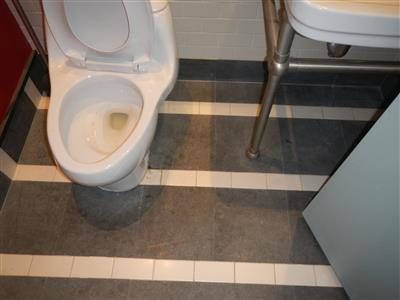
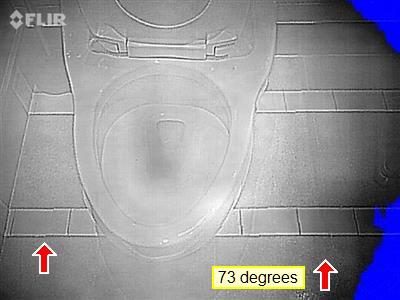
2016, about 128 years old, a condominium: nothing flagged. Also noted: “Moisture reading on hall bathroom floor was at 6% with a room temperature of 73* and a floor temperature at 73*, between tile joints”; “Consequently infrared photography showed no evidence of excessive moisture in tile floor”.
2015, a town home, about 95 years old: 1 item flagged: 1 electrical system. Flagged, in Lou’s words: “Common area 1st floor main hallway battery missing from smoke detector”.
“Flagged” is HomeGauge’s Repair or Replace mark, not a verdict on the house. See a complete report.
Related: The Manhattan page · What an inspection costs · Schedule an inspection.